North Sulawesi gives you two completely different kinds of diving within a couple of hours of the same airport. On one side, Bunaken's coral walls drop into the deep blue. On the other, the dark sand of the Lembeh Strait hides some of the strangest creatures in the ocean. Here is how the region works.
Why dive North Sulawesi?
Because few places put such different diving so close together. Bunaken National Park, a 45-minute boat ride from Manado, is about vertical coral walls, turtles and blue water. The Lembeh Strait, on the opposite coast near Bitung, is about slow dives over dark volcanic sand in search of frogfish, octopus and nudibranchs. Between them, the Bangka Islands add current-swept pinnacles covered in soft coral. All three sit inside the Coral Triangle.
Choose Bunaken for walls and scenery, Lembeh for macro photography and unusual creatures. With a week or more, do both: four or five days at Bunaken or Bangka, then three or four in Lembeh. Most divers find the contrast is the best part of the trip.
What is diving in Bunaken National Park like?
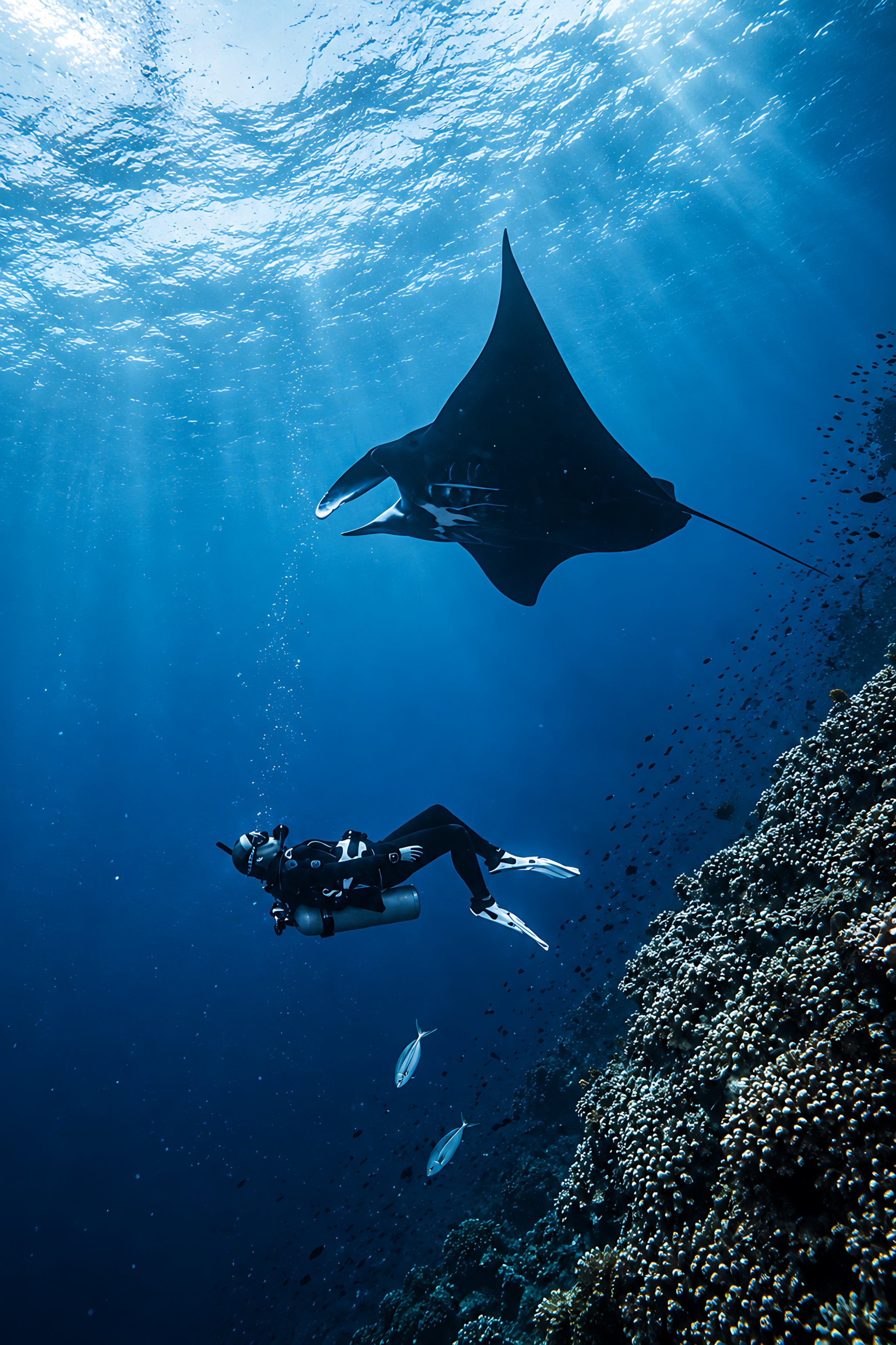
Bunaken is wall diving. The reef flats are shallow, then the edge drops into vertical walls cut with overhangs, cracks and small caves, and you drift along the face with turtles on the ledges and fish in the blue. The park became a national park in 1991 and covers about 89,000 hectares, 97 percent of it sea, including five islands and two stretches of mainland coast where the diving is more on slopes and sand.
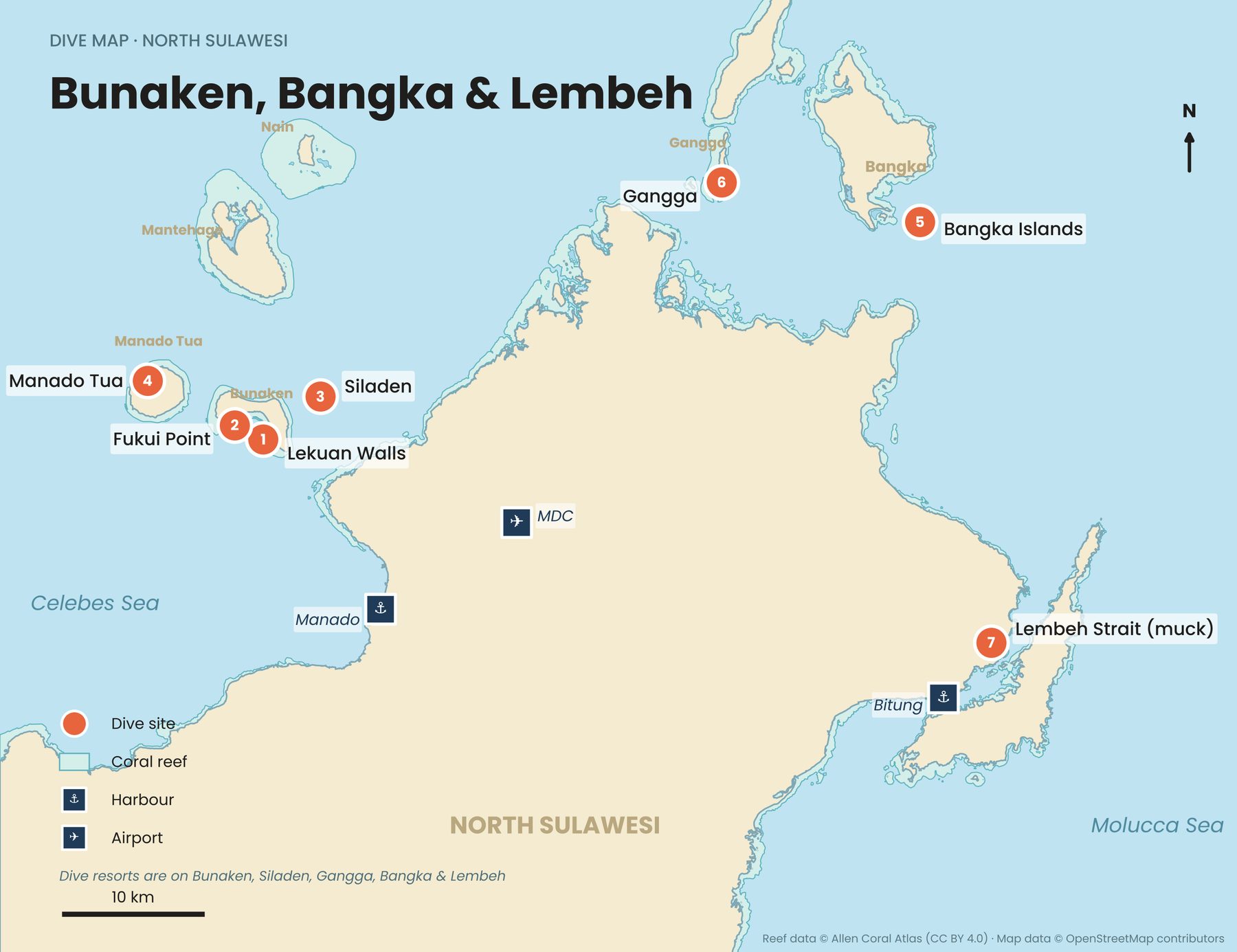
- Lekuan WallsThe classic Bunaken dive, on the south side: overhangs, cracks and lots of turtles. Many divers do it more than once.
- Fukui PointA sloping reef and wall on the west side, often with big fish and good coral.
- SiladenA small island with resorts and easy diving close to shore. A good first dive.
- Manado TuaThe cone of an old volcano rising out of the sea, with walls around its shores.
Operators run around 50 sites, so a week need not repeat itself. On a wall, depth creeps up on you because there is no bottom: agree a maximum depth with your guide, start deep and work shallower, and use the reef top for a long safety stop. Currents are usually mild to moderate, and most dives are gentle drifts. Keep your hands and fins off the fragile overhangs.
How much is the Bunaken National Park fee?
As of 2025 to 2026, foreign visitors pay around Rp150,000 per person per day to enter Bunaken National Park, while Indonesian citizens pay a much lower rate. The fee applies to divers and snorkellers alike, and most resorts collect it for you or help you buy it. The park has moved to electronic tickets, and operators say entering without one can bring a fine of several times the normal fare. Confirm the current amount, and whether your package includes it, before you arrive.
Bangka and Gangga: soft corals and pinnacles
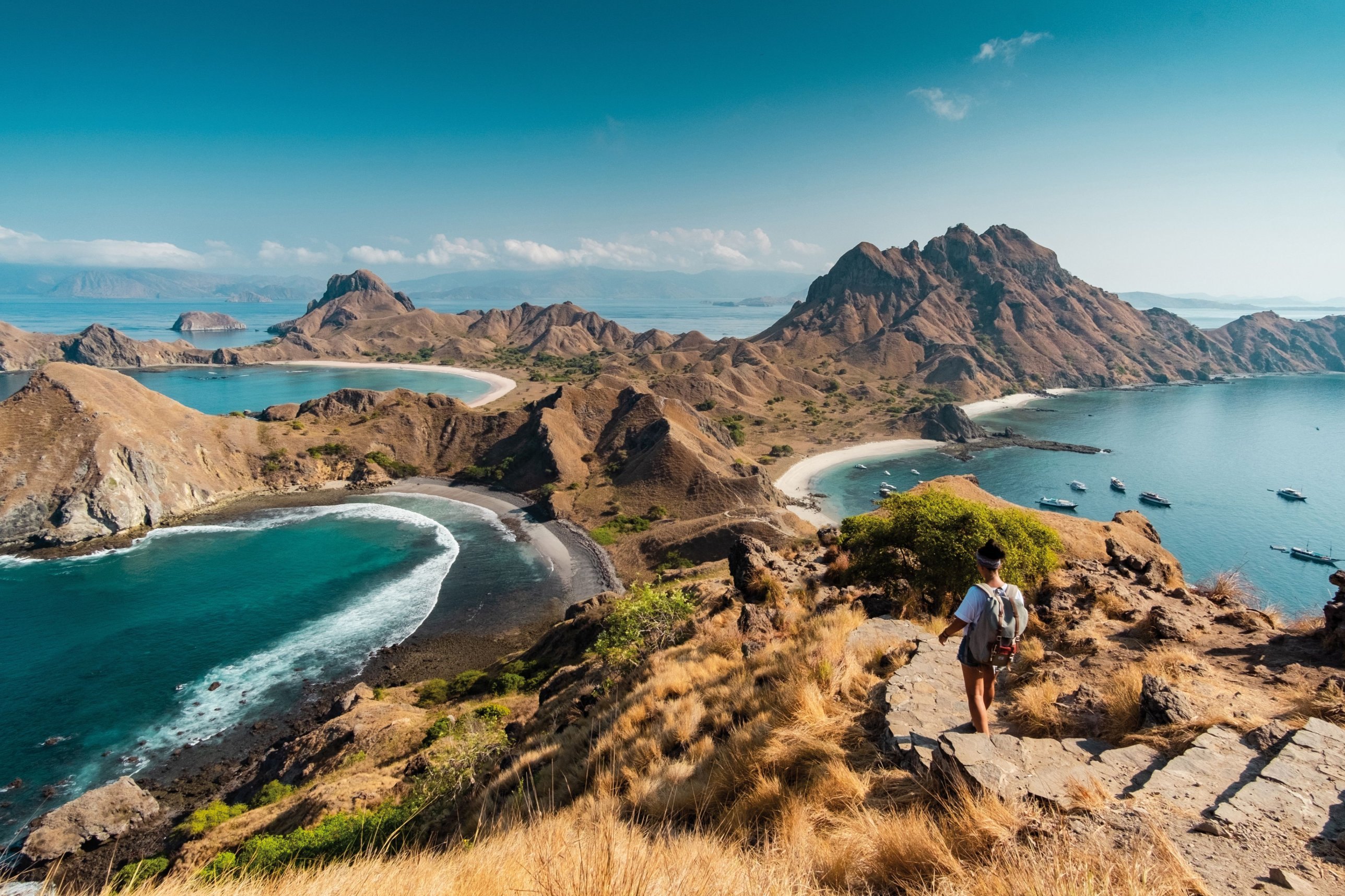
At Sulawesi's northeastern tip, where the Celebes Sea meets the Molucca Sea, rocky pinnacles rise from deep water covered in soft corals in reds, purples and yellows, with fish schooling around them in the current.
- Bangka IslandsColourful soft-coral pinnacles, often with current and big schools of fish; frogfish, pygmy seahorses and nudibranchs are regulars too.
- GanggaA quiet island with resorts and a mix of reef and muck diving, a good base between Bunaken and Lembeh.
In 2008 a mining company was granted a permit to explore for iron ore on Bangka. Residents and dive operators took it to court and won, and the energy ministry revoked its production permit in 2017, a rare case of tourism and local communities defending a reef in court. Currents around the pinnacles can be strong, especially around full and new moon, so these dives suit divers comfortable with drifts and negative entries.
What is muck diving in the Lembeh Strait?
Muck diving means slow dives over sand, silt and rubble, searching for small, often camouflaged animals rather than coral. The Lembeh Strait, a channel about 16 kilometres long and one to two kilometres wide near the port of Bitung, is the most famous muck-diving destination in the world. Indonesia's tourism board counts 88 dive sites, most between about 15 and 25 metres, with little current.
- Lembeh StraitDark volcanic sand and rubble, and that's the point: mimic octopus, hairy frogfish, flamboyant cuttlefish, pygmy seahorses and many other small creatures.
At first the bottom looks empty, until your guide points at the sand and a stargazer or frogfish appears. Expect wonderpus and coconut octopus, the venomous blue-ringed octopus, bobtail squid on night dives, ghost pipefish, mandarinfish and nudibranchs in enormous variety. Hairball, Nudi Falls, Jahir and Police Pier are names you will hear. The Banggai cardinalfish, found naturally only in the Banggai Islands and listed as Endangered by the IUCN, has an established population here from aquarium-trade releases around 2000; see our Sulawesi overview.
Good buoyancy is essential. Don't ask guides to move, prod or hold anything, limit strobe flashes on light-sensitive species, and use frog kicks a hand's width off the sand. Gloves are not needed, and many resorts ask you not to wear them.
Getting there and where to stay
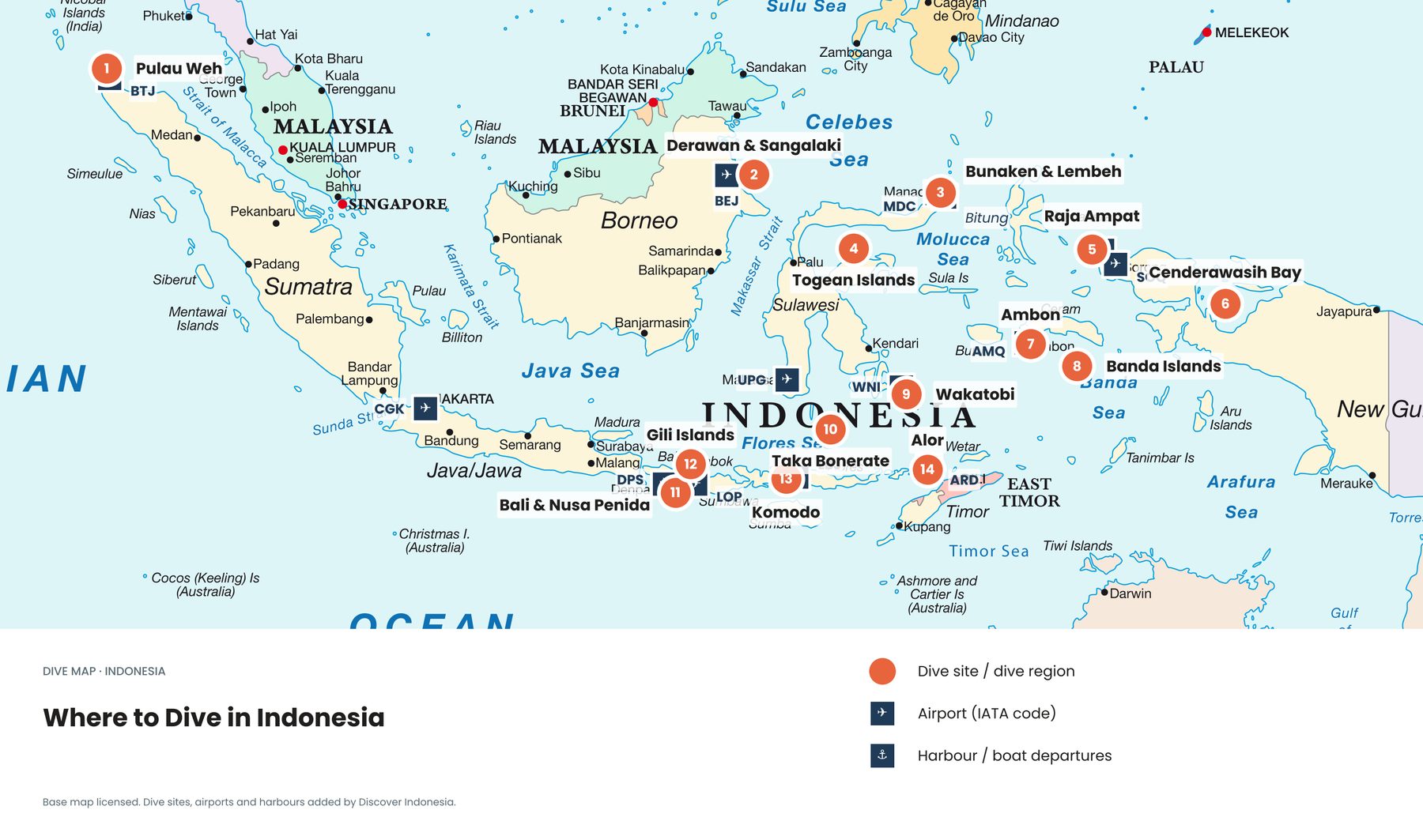
Fly to Manado's Sam Ratulangi International Airport (MDC), usually via Jakarta, Bali or Makassar. Bunaken is a short drive into Manado and about 45 minutes by boat; Lembeh is a road transfer east to Bitung and a crossing of around 15 minutes; Bangka and Gangga are a drive north and a boat across. Resorts arrange the transfers, so give them your flight times.
Where you sleep decides how much time you spend on boats. Bunaken Island and Siladen have the shortest rides to the walls; mainland resorts on the Manado coast are closer to the airport and restaurants; Bangka and Gangga suit the pinnacles; and Lembeh's resorts, many built around photography, have camera rooms and dedicated critter guides.
When is the best time to dive North Sulawesi?
You can dive North Sulawesi all year. The drier months, roughly April to October, usually bring the calmest seas and best visibility at Bunaken. December to February is the wettest period, when the crossing to Bunaken can be rough and visibility at mainland sites drops after rain.
| Period | Bunaken and Bangka | Lembeh Strait |
|---|---|---|
| April to June | Settled weather, good visibility, quieter than mid-year | Good conditions, warm water |
| July to October | Peak season, often the best visibility; book ahead | Water at its coolest, can dip to the mid-20s °C; good for frogfish and flamboyant cuttlefish |
| November to March | Rainier, crossings rougher, especially January and February | Still good; muck sites depend less on visibility |
Water generally sits between about 26 and 29°C. A 3 mm suit is enough at Bunaken; for long, still dives in Lembeh, many divers prefer 5 mm in the cooler months. August, Easter and Christmas are the busiest times at the resorts.
Plan your North Sulawesi dive trip
A good template for eight to ten days: transfer straight from Manado to Bunaken, Siladen or Bangka for four nights of walls and pinnacles, then move to Lembeh for three or four nights of critters, and finish with a dry day on land. Two days in Lembeh is not enough to adjust your eyes, and each extra transfer eats half a day, so two bases is ideal. After several days of repeated diving, leave at least 18 hours before your flight out of Manado, as Divers Alert Network advises.
Quick answers
Can you snorkel at Bunaken?
Yes, and it is one of the better snorkelling spots in Indonesia. Swim out at mid to high tide and float over the lip of the wall; at low tide the flats can be too shallow to cross without damaging coral.
Is North Sulawesi good for beginners?
Yes. Bunaken's walls usually have mild currents and Lembeh's dives are shallow and slow. Bangka's pinnacles are better left until you have some drift-diving experience.
Bunaken or Lembeh?
Divers who enjoy swimming and scenery tend to love Bunaken. Divers with a camera, or who like moving slowly and looking closely, often say Lembeh changed how they dive.
For the wider picture, see our guide to diving Sulawesi and our overview of diving in Indonesia. Our Discover Indonesia guide to Sulawesi covers the whole island in more depth; browse all our guides.
Facts checked October 2026. Park fees, ticketing rules and flight routes change; confirm with Bunaken National Park (Balai Taman Nasional Bunaken) and your dive operator before you travel.
- Bunaken National Park (Wikipedia)
- Wisata Pulau Bunaken: lokasi, harga tiket, spot diving (detikSulsel, 2025)
- Bunaken e-ticket (Villa Queen's Bunaken, 2025)
- The Lembeh Strait (Indonesia Travel, Ministry of Tourism)
- Lembeh muck diving guide (Dive The World)
- Best time to dive the Lembeh Strait (Liveaboard.com)
- Bunaken and Manado (Zubludiving)
- Bangka Island (North Sulawesi) (Wikipedia)
- Struggle against mining on Bangka Island continues despite wins in court (Mongabay / Eco-Business, 2016)
- Banggai cardinalfish (Wikipedia, citing IUCN 2025)
- Reef data (Allen Coral Atlas, CC BY 4.0)
- Map data (© OpenStreetMap contributors, ODbL)