Indonesia counts 127 active volcanoes, and six of them define the classic volcano trip: Bromo, Ijen, Rinjani, Agung, Merapi and Semeru. They range from a one-hour sunrise walk to a three-day expedition. Two of the six are closed to summit climbers in October 2026. Here is how to choose, when to go and how to check that a mountain is safe before you set out.
Which Indonesian volcano should I climb?
For most first-time visitors the answer is Bromo for an easy sunrise and Ijen for a moderate night hike, both in East Java and easy to combine. Fit trekkers with three days should choose Rinjani on Lombok, and those based in Bali with one hard night to spare should look at Agung. Merapi and Semeru are best treated as viewing experiences in 2026, because their summits are closed. Every volcano has a profile on our volcanoes page.
How do the six volcanoes compare?
The six differ less in height than in commitment: a 3 a.m. alarm and a short walk at Bromo, a gas mask and a 1 a.m. start at Ijen, a sleepless night on loose rock at Agung, two nights in a tent at Rinjani. The table shows the essentials, including the status we could confirm in October 2026.
| Volcano | Height | Time needed | Difficulty | Best months | Status, Oct 2026 |
|---|---|---|---|---|---|
| Bromo (East Java) | 2,329 m | Half a day, sunrise | Easy | Dry season, about April to October | Open, but the Penanjakan viewpoint has been closed since 17 October 2026 because of a fire; Level II |
| Ijen (East Java) | 2,769 m (complex); rim about 2,350 m | One night, 5 to 6 hours | Moderate | Dry season, about April to October | Reopened 28 September 2026 after a fire closure |
| Rinjani (Lombok) | 3,726 m | 2 to 4 days, 3 is classic | Very hard | Trails open about April to December; July to September clearest | Main routes open, Torean closed; Level II |
| Agung (Bali) | 2,997 m (Smithsonian) | One night: 6 to 8 hours or 11 to 12 hours | Very hard | About April or May to October | Reopened 25 April 2026 after a ceremony closure; check ceremony dates |
| Merapi (Central Java) | About 2,910 m | Half-day jeep tour | Easy (tour only) | Dry season, early mornings | Summit closed; Level III since November 2020 |
| Semeru (East Java) | 3,676 m | 2 days to Ranu Kumbolo when open | Moderate (lake trail) | Dry season, about April to October | All trails closed since a late-August 2026 fire; Level III |
Which volcano is best for beginners and families?
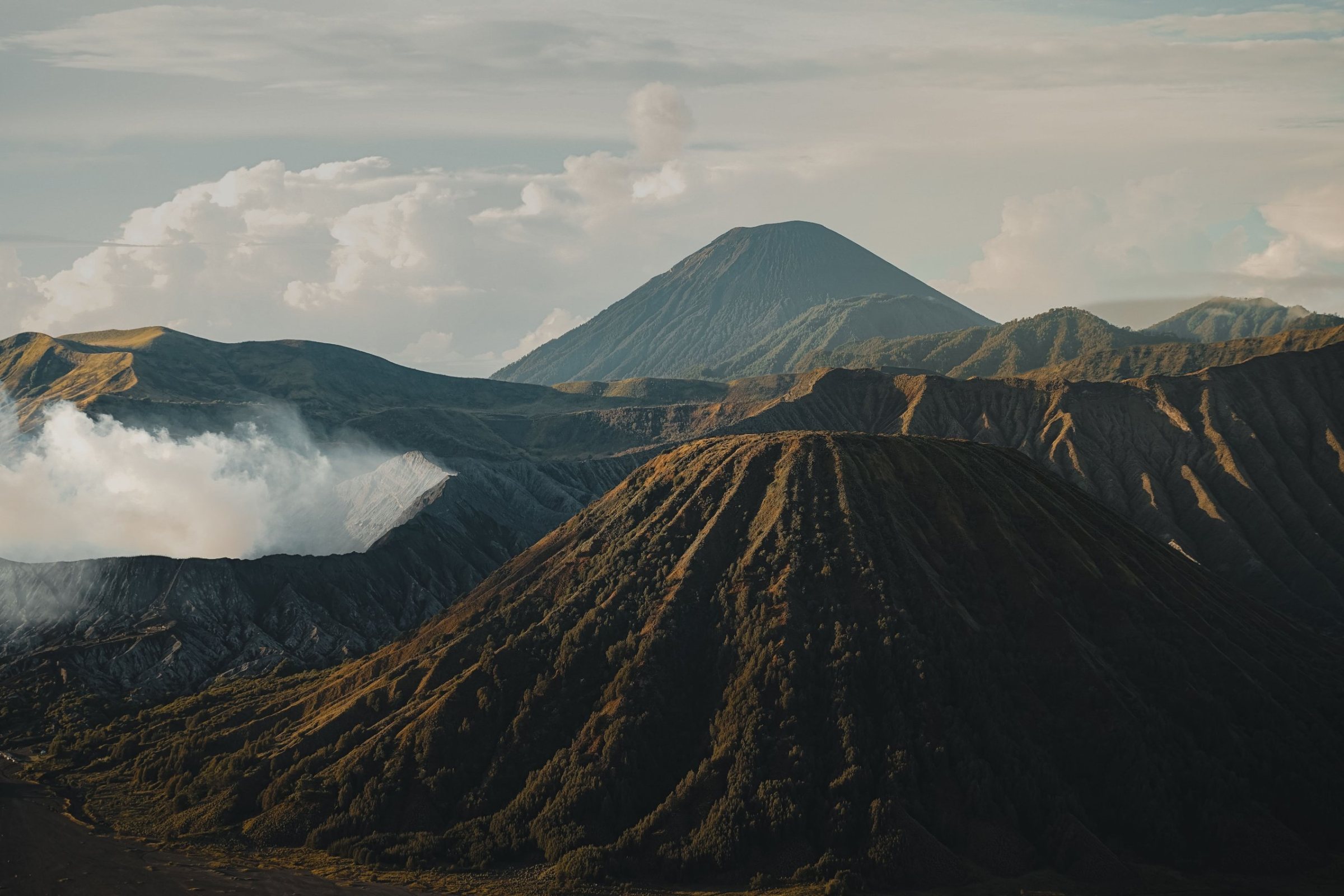
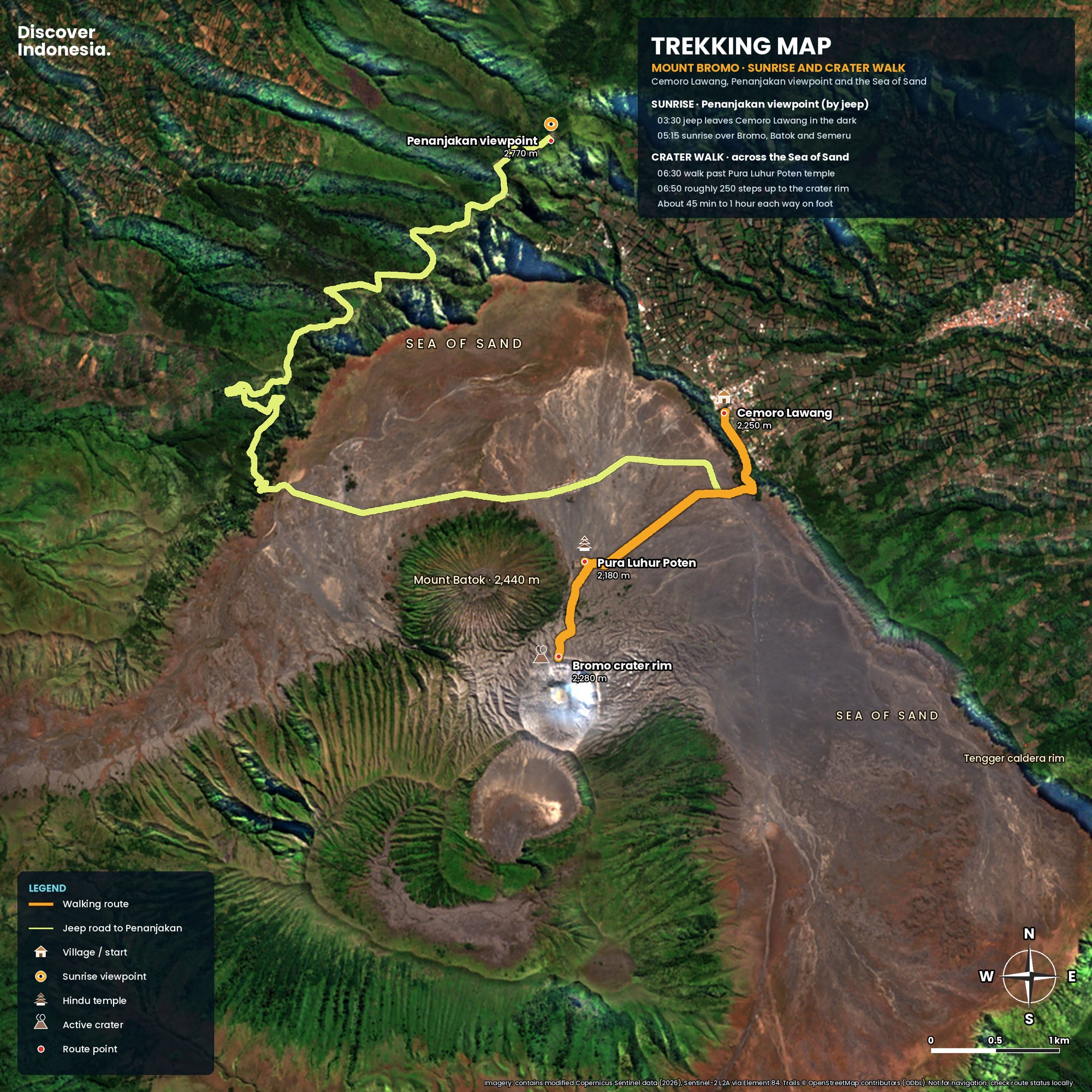
Bromo. Most visitors take a jeep in the dark to the Penanjakan viewpoint, then drop into the caldera past the temple Pura Luhur Poten and walk across the Sea of Sand: about 45 minutes, then roughly 250 steep steps to the rim. Pre-dawn temperatures can fall below 10°C, so even children need proper jackets. Our Mount Bromo sunrise guide covers viewpoints and timing.
The Merapi jeep tour above Yogyakarta is the other easy choice, with no hiking at all: open jeeps follow the 2010 pyroclastic flows to the Kaliadem bunker. See our Merapi lava tour guide. Ijen is possible for fit teenagers, but its crater fills with sulphur dioxide and the descent is steep and rocky. It is not for young children or anyone with asthma or heart or lung conditions.
Which is the hardest volcano trek in Indonesia?
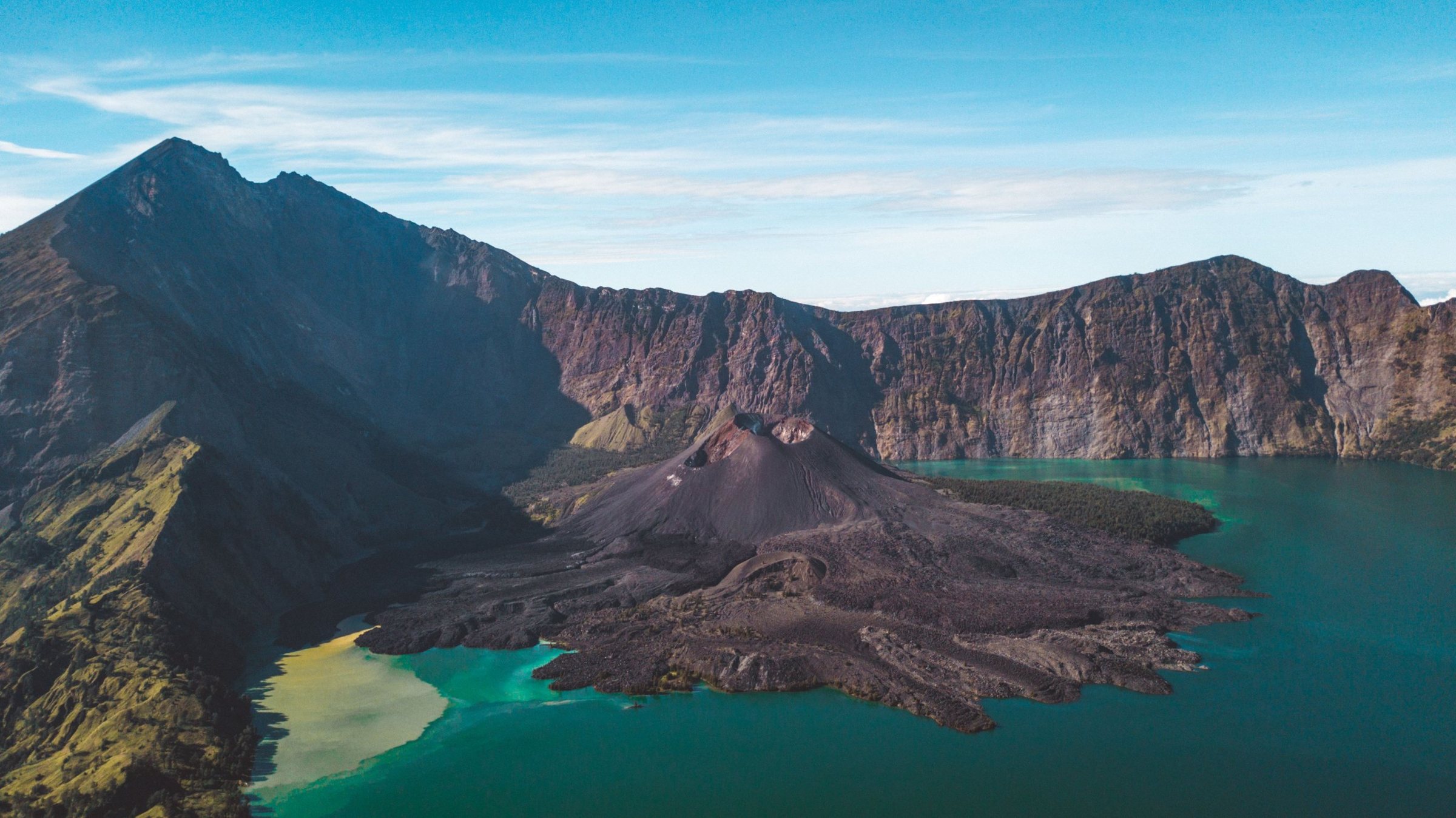
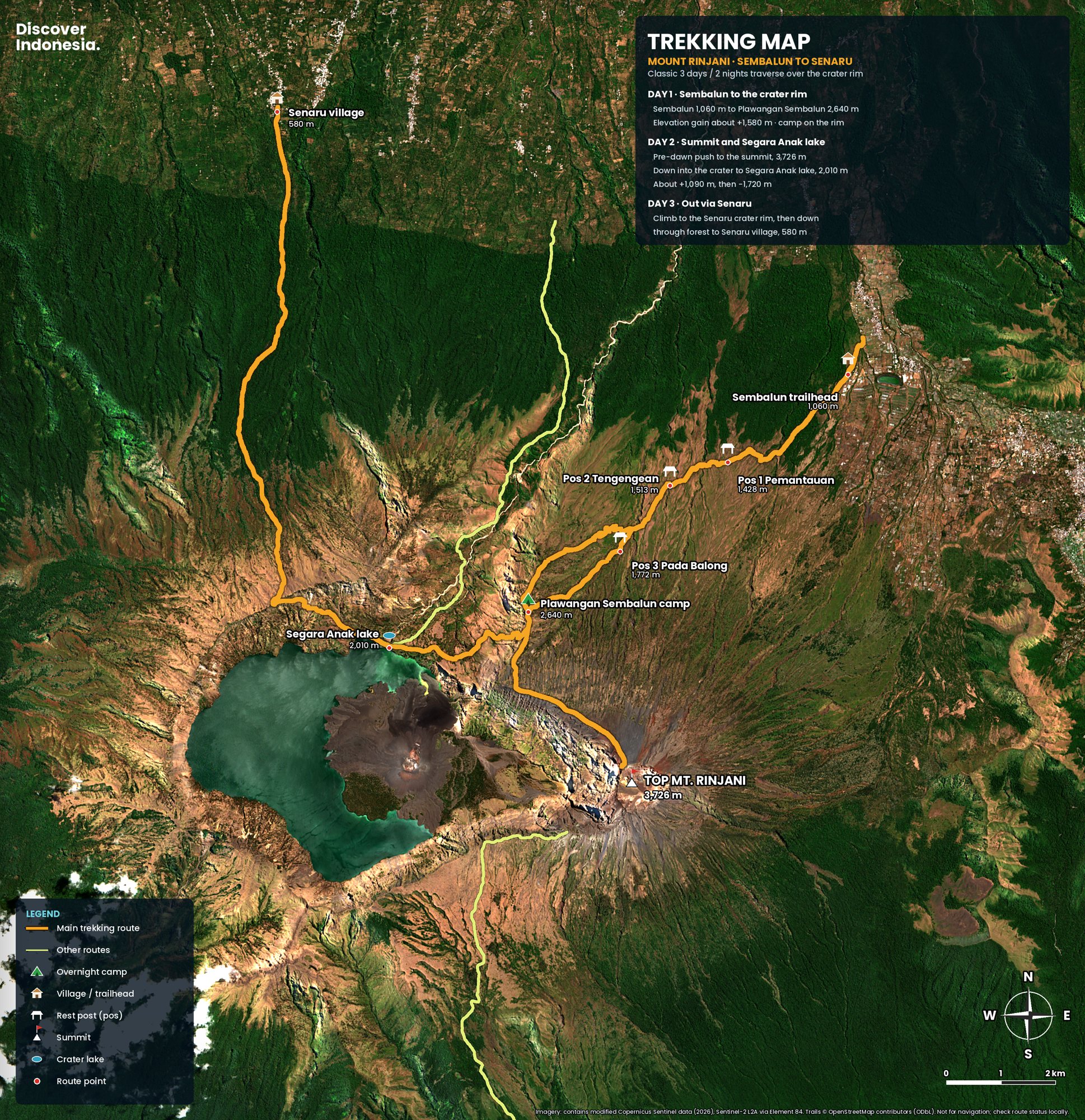
Of the six, Rinjani is the hardest overall because it combines altitude, multiple days and a summit on loose scree. Day one climbs about 1,500 metres to the rim camp at roughly 2,640 metres, and the 2 a.m. summit push gains another 1,000 metres or so. Treks are booked through eRinjani with a licensed operator, and guides and porters are mandatory. Our Rinjani guide answers the common questions.
Agung is the steepest single push, done in one night from around midnight. The Pasar Agung route reaches the southern crater rim in 6 to 8 hours round trip; the Besakih route to the true summit takes 11 to 12. A registered local guide is required, and tourists caught climbing without one have been deported. Details are in our Mount Agung climbing guide.
Are the volcanoes open in October 2026?
Bromo, Ijen and the main Rinjani routes are open, and Agung reopened in April; Merapi's summit and every Semeru trail are closed. Dry-season fires closed Bromo, Ijen and Semeru at different times in 2026, so recheck any booking.
Bromo. Fires closed Bromo from 8 to 20 August and again from 12 to 19 September 2026, and since the evening of 17 October all traffic to the Penanjakan viewpoint has been stopped while a fire there is brought under control. On 15 October four members of a firefighting team died. Sunrise trips run from Seruni Point and the Cemoro Lawang side. Tickets are sold through bromotenggersemeru.id, with a daily quota of 2,752 visitors.
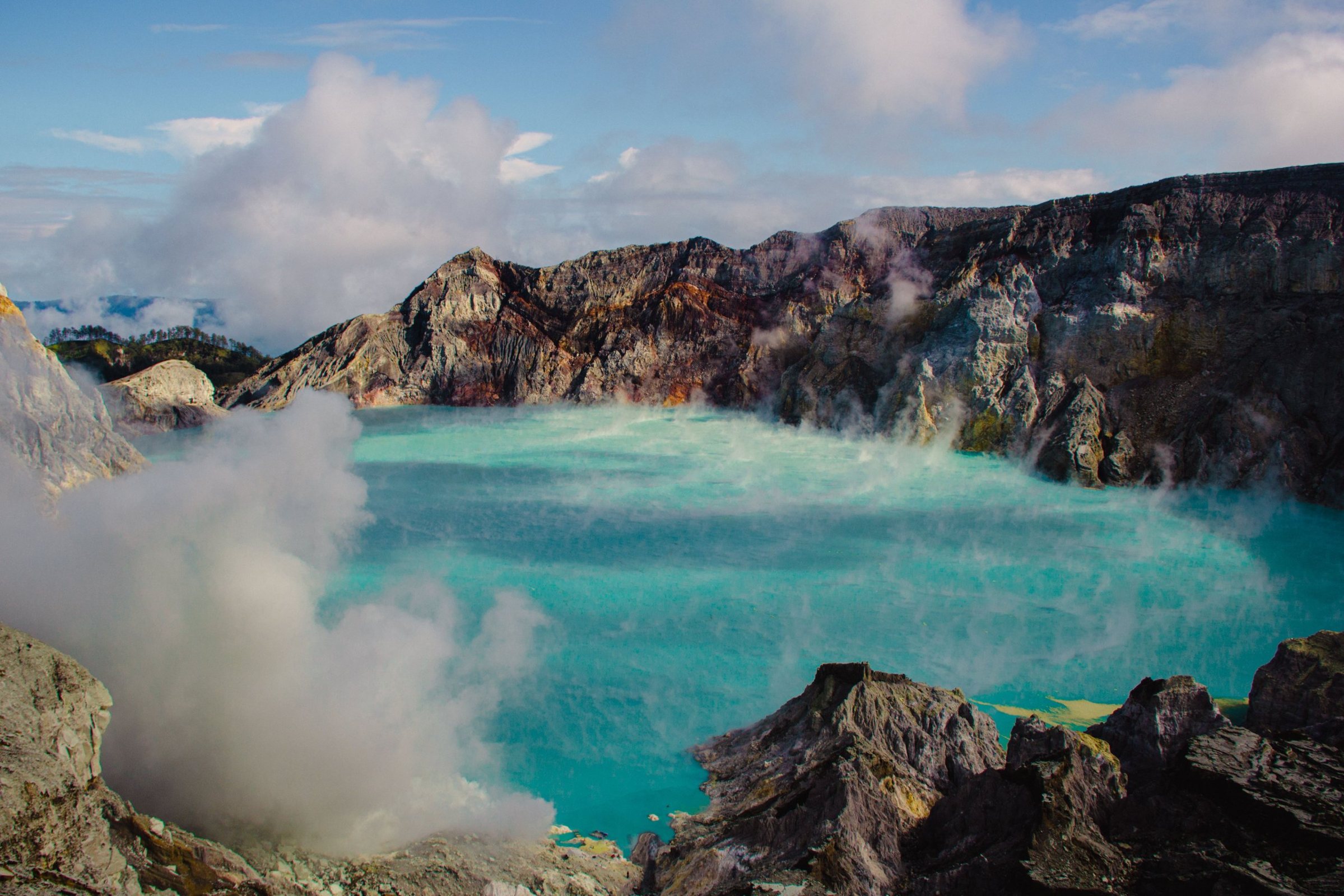
Ijen and Rinjani. BBKSDA Jawa Timur closed Ijen on 4 September 2026 for a forest fire and reopened it on 28 September; visitors must carry a torch, a mask and warm clothing. Its gas hazard is constant, and crater access was restricted when the alert rose to Level II in July 2024. On Rinjani, eRinjani bookings resumed on 3 October; Torean remains closed, and all trails close every rainy season, usually from January to the end of March.
Agung, Merapi and Semeru. Agung was closed from 28 March to 24 April 2026 for the ceremonies at Besakih, and ceremony closures can come at short notice. Merapi's summit has been closed since 2018 and at Level III, Siaga, since 5 November 2020; the lava tour runs outside the danger zone. Semeru reached Level IV in November 2025, reopened on 24 April 2026 only as far as Ranu Kumbolo, then closed again after a fire around 26 August, with no reopening date. Our Semeru and Ranu Kumbolo guide explains the route for when it reopens.
How do I check a volcano's alert level?
Use MAGMA Indonesia, the Geological Agency's official volcano service, at magma.esdm.go.id or through its app. Check it a few days before you travel and again on the day.
- Level I, Normal: no visible or instrumental change.
- Level II, Waspada (alert): activity is rising, mainly threatening the area around the crater. Bromo and Rinjani often sit here and can still be visited outside the set radius.
- Level III, Siaga (standby): a larger eruption could follow. Summit trails are closed; avoid river valleys that start near the summit.
- Level IV, Awas (danger): an eruption is underway or likely within 24 hours, and people in the danger zone must evacuate.
Parks also close trails for fire, weather, ceremonies or ecosystem recovery, as Bromo did for a week in April 2026, so check the park or conservation agency too.
Combining volcanoes in one trip
Bromo and Ijen is the most popular volcano route in Indonesia. Sleep at Cemoro Lawang, do the Bromo sunrise, and drive east to the Ijen area. Leave around 1 a.m. for the roughly 3 kilometre trail from Paltuding to the rim, see the blue fire and the sunrise, and descend by mid-morning. The ferry from Ketapang crosses to Gilimanuk, so the loop ends in Bali. Allow three nights at minimum, or four to sleep properly.
Agung and Rinjani also combine well, since Bali and Lombok are linked by short flights and boats. Go easiest first: Batur as a warm-up, Agung if it is open and no ceremony is on, then Rinjani, with at least two or three days between Agung and Rinjani. With about two weeks you can link everything: Bromo, Ijen, Batur or Agung, then Rinjani.
How do I stay safe on an Indonesian volcano?
Check MAGMA and the park, go with a licensed local guide, turn back when your guide says so, and respect every closed zone.
- Cold: Ijen's crater can drop to around 2 to 10°C, and Rinjani's rim camp to a few degrees above freezing.
- Gas: at Ijen, bring a proper respirator with filters and move away if the wind pushes fumes toward you.
- Falls: scree on Rinjani and loose rock on Agung cause more injuries than eruptions.
- Sudden explosions: Bromo's phreatic blast in June 2004 killed two tourists with little warning.
Quick answers
Which volcano is best for photographers?
Bromo at sunrise and Ijen in the dark, only one long day apart. Ijen's blue fire is visible only in full darkness; read our Ijen blue fire guide before you go.
What is the easiest volcano climb in Indonesia?
Mount Batur in Bali, a pre-dawn hike of one to two hours to a summit at about 1,717 metres.
What is Indonesia's highest volcano?
Kerinci in Sumatra, about 3,800 metres according to the Smithsonian and 3,805 metres in Indonesian sources.
Why does Indonesia have so many volcanoes?
Because the Indian Ocean seafloor is sliding beneath Asia along the Sunda Arc, about 3,000 kilometres long. As that plate sinks, it melts and feeds magma to the volcanoes above it.
Our Discover Indonesia guides to Bromo, Ijen, Rinjani, Agung, Merapi and Semeru cover routes, itineraries and where to stay in more depth, and the volcano pages for Bromo, Ijen, Rinjani, Agung, Merapi and Semeru explain the geology behind each one.
Facts checked October 2026. Alert levels, fire and ceremony closures, quotas and permit rules change often; check MAGMA Indonesia and the relevant park (Bromo Tengger Semeru, BBKSDA Jawa Timur for Ijen, Rinjani or Merapi national parks) before you travel.
- Kerinci (Smithsonian Global Volcanism Program)
- Batur (Smithsonian Global Volcanism Program)
- Bromo (Smithsonian Global Volcanism Program)
- Ijen (Smithsonian Global Volcanism Program)
- Rinjani (Smithsonian Global Volcanism Program)
- Badan Geologi: 127 Gunung Berapi di Indonesia Berstatus Aktif (CNN Indonesia)
- Status Gunung Api Hari Ini, 8 September 2026 (GoodStats, from MAGMA Indonesia data)
- 4 Macam Status Gunung Berapi (detikNews)
- Gunung Bromo Dibuka Kembali (CNA Indonesia)
- TNBTS sebut penutupan Bromo untuk pemulihan ekosistem (Antara)
- TWA Kawah Ijen Kembali Dibuka Pasca Kebakaran (Jawa Pos)
- TNBTS: Wisata Bromo Tetap Buka, Pendakian Semeru Ditutup Total (Metro TV)
- Mulai 24 April Gunung Semeru Dibuka Lagi (Metro TV)
- Mount Agung in Bali to Remain Closed for 28 Days (Travel Trade Journal)
- Status Gunung Merapi naik menjadi Siaga (Antara Jogja)
- Gunung Merapi Berstatus Siaga (Suara Surabaya)
- The 2010 explosive eruption of Java's Merapi volcano (USGS)
- Status G. Ijen Meningkat (Ministry of Energy and Mineral Resources)