Komodo is famous for its dragons, but divers come for the water: narrow channels where two seas meet, reefs thick with fish, and one of the largest reef manta populations ever studied. The catch is the current. This is where to dive, when to go north or south, and how the park's new 2026 rules work.
Why are the currents in Komodo so strong?
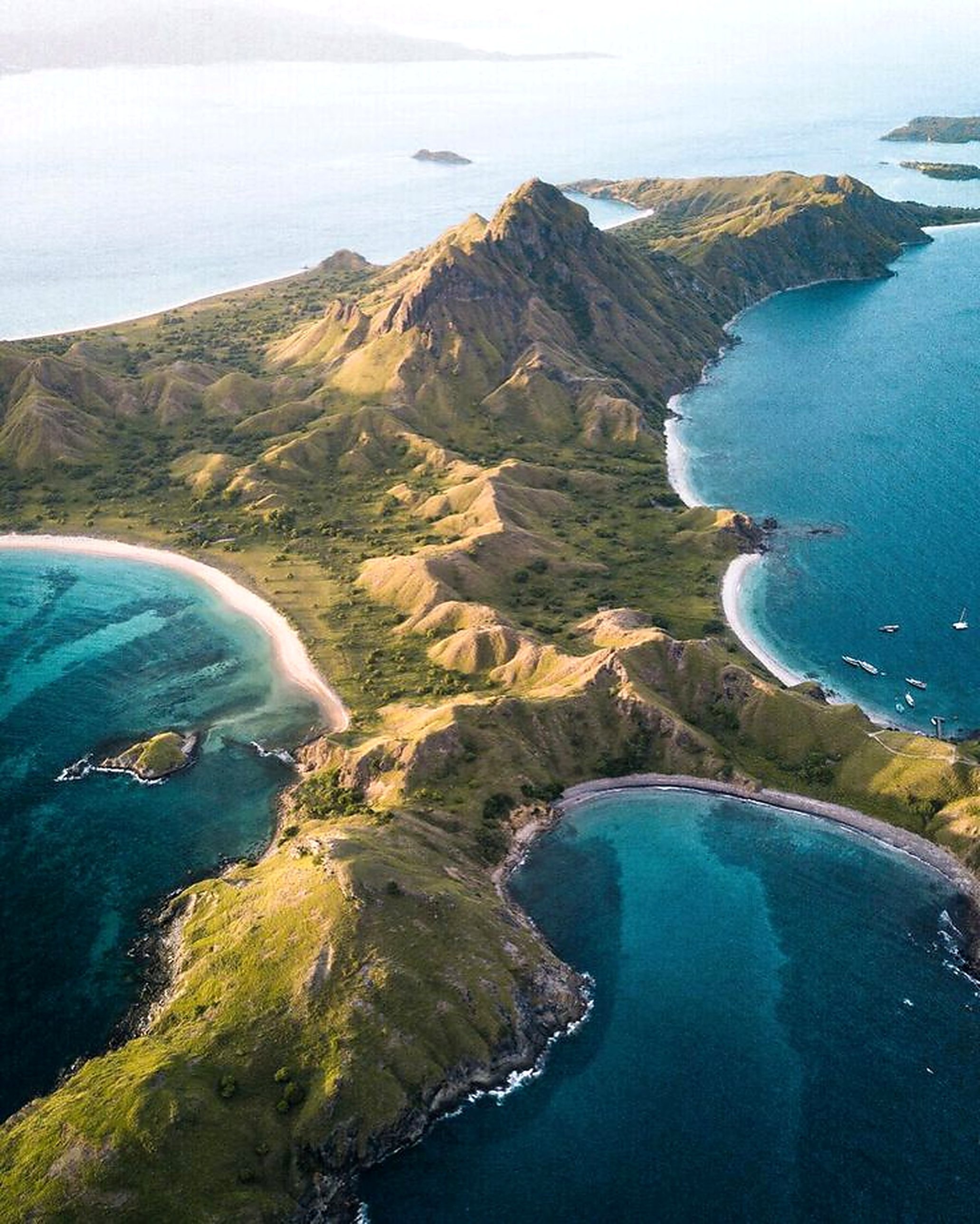
Because the park sits in a gap between two seas at different levels. The warm Flores Sea lies to the north and the cooler Sumba Strait and Indian Ocean to the south, and the tides push water between them through the narrow channels around Komodo, Padar, Rinca and Flores. The tidal flows through the Sape Strait, on the park's western side, are counted among the strongest in the world.
That flow carries plankton through the park on every tide, feeding the schooling fish, sharks and mantas. The north is usually warmer, with clear blue water and big schools; the south is colder and greener, with filter feeders and small creatures. Divers base themselves in Labuan Bajo on Flores. The Indonesian Throughflow explains the bigger picture.
The north: big fish and fast water
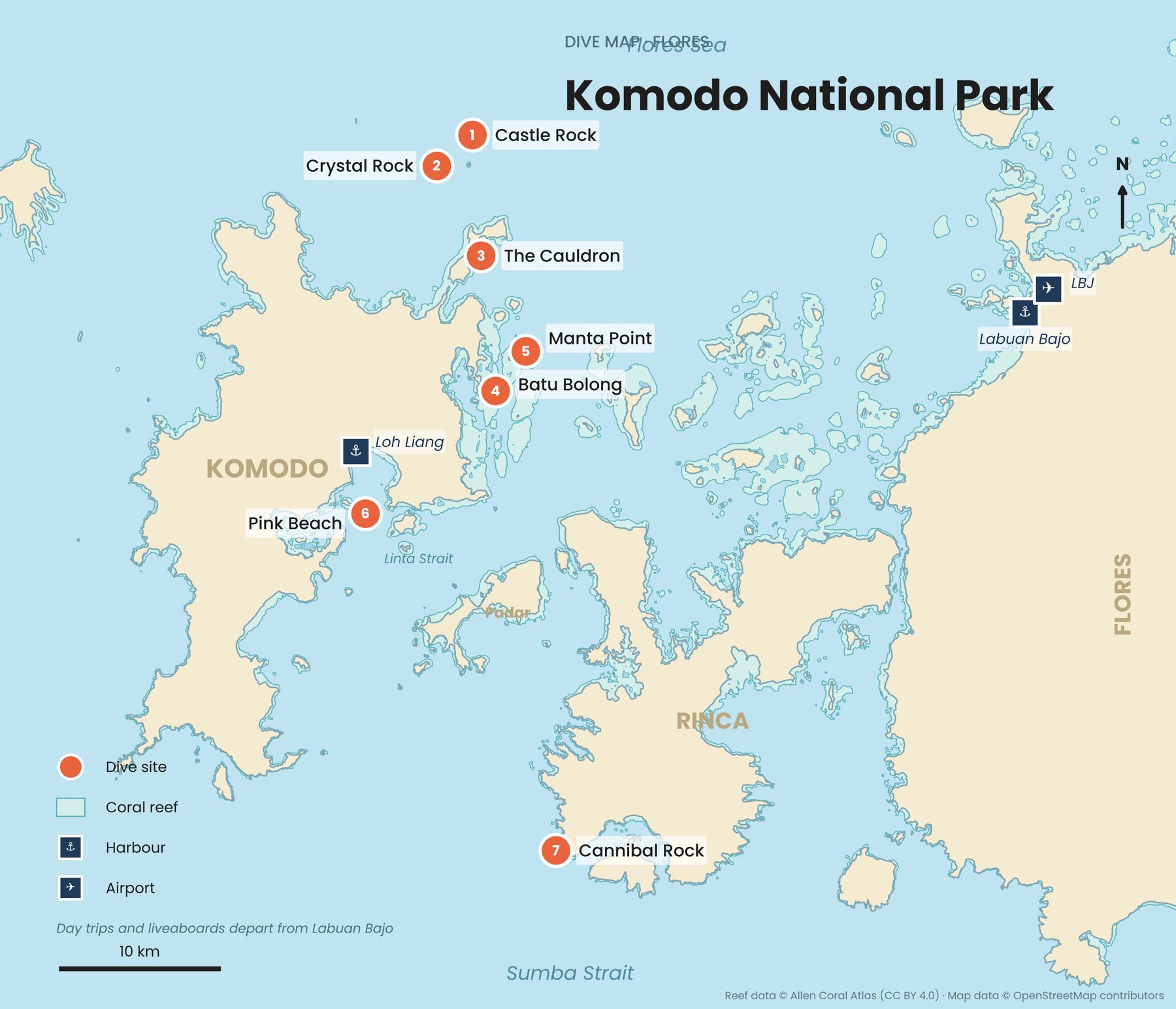
The northern sites lie in open water around Gili Lawa Darat and the small islands off Komodo's northern tip. These are the dives people come for, and the ones that demand the most experience.
- Castle RockA submerged pinnacle in open water, with white-tip reef sharks, giant trevally and Napoleon wrasse working the current. Negative entries are standard. Advanced divers.
- Crystal RockUsually the clearest water in the area, with soft corals in every colour. The current splits around the rock, so there is often a calmer side.
- The CauldronAlso called "Shotgun": a sandy bowl where the current shoots you through a narrow channel. Timed wrong, it is a washing machine, so trust your guide.
The centre and south: mantas and critters
The central park, between Komodo, Rinca and Labuan Bajo, is where most day trips go, mixing sheltered reefs for newer divers with one of Indonesia's most current-swept rocks.
- Batu BolongA small rock with a hole through it, right in the current. The sheltered side is a steep coral slope with turtles and reef sharks. Stay in the lee and follow your guide's line.
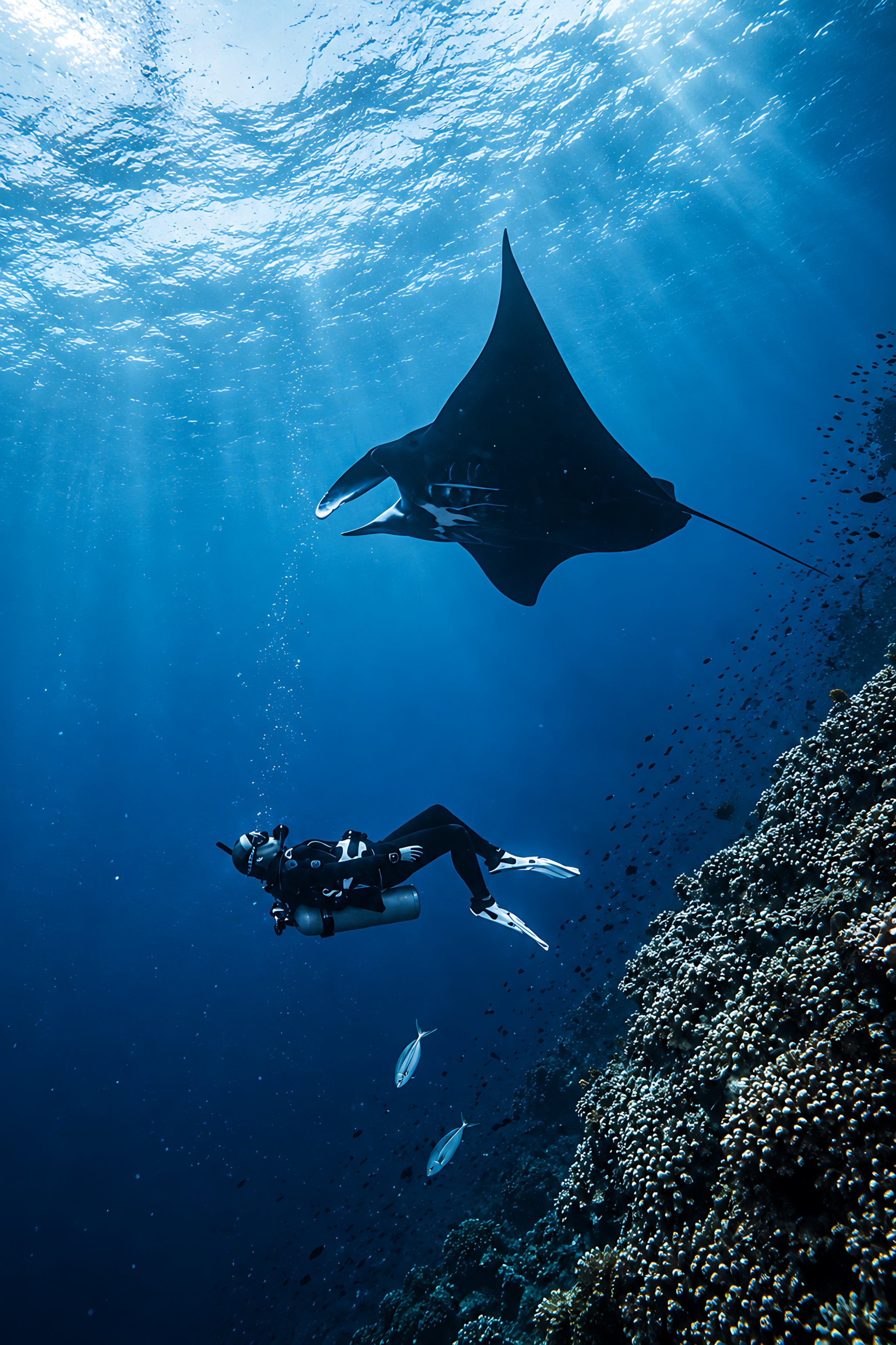
- Manta PointKarang Makassar: a shallow drift over rubble where mantas feed and are cleaned. Even snorkellers can see them on a good day.
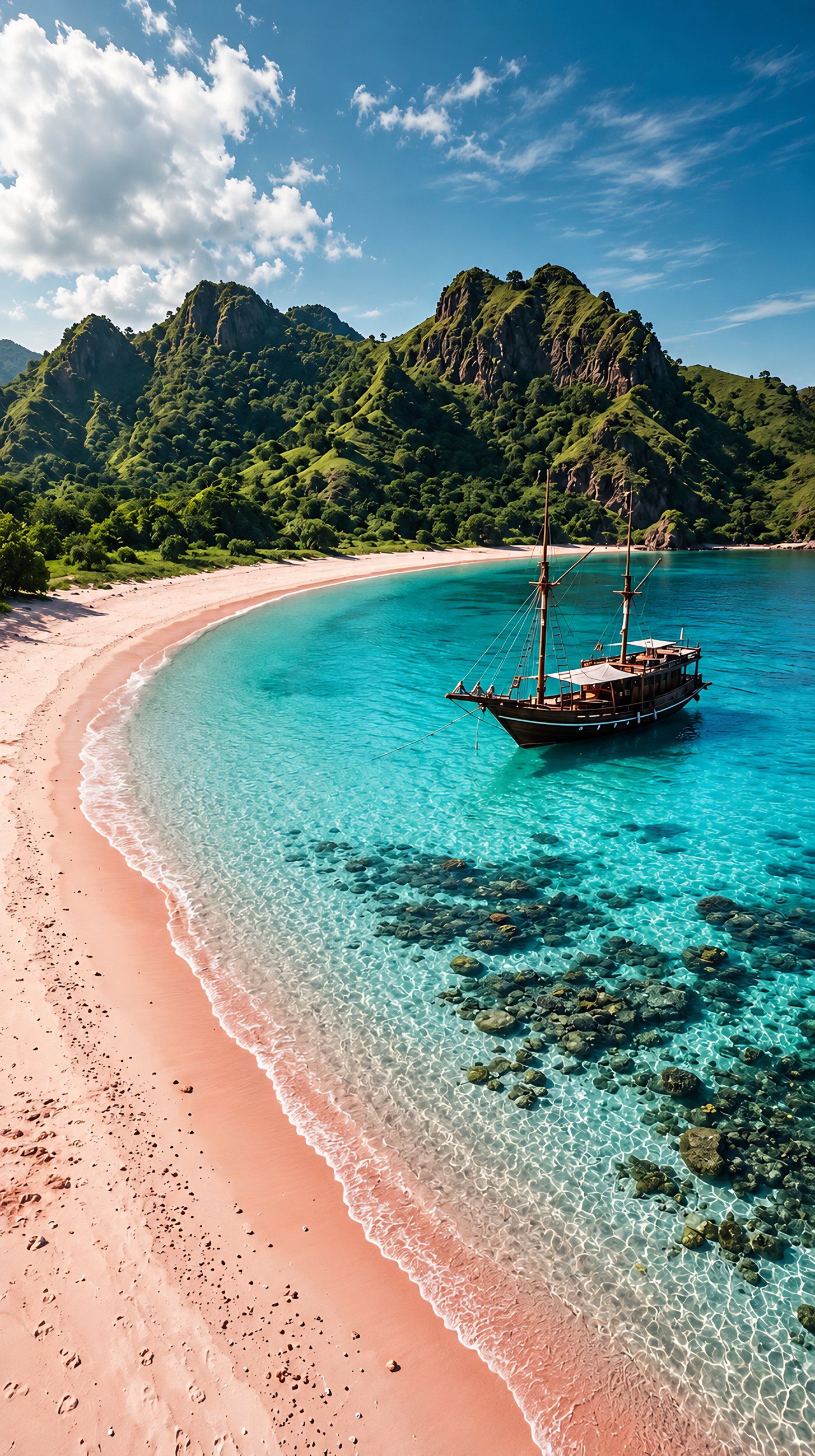
- Pink BeachA gentle sloping reef off Komodo Island's pinkish sand. A good first dive, with little current on most tides.
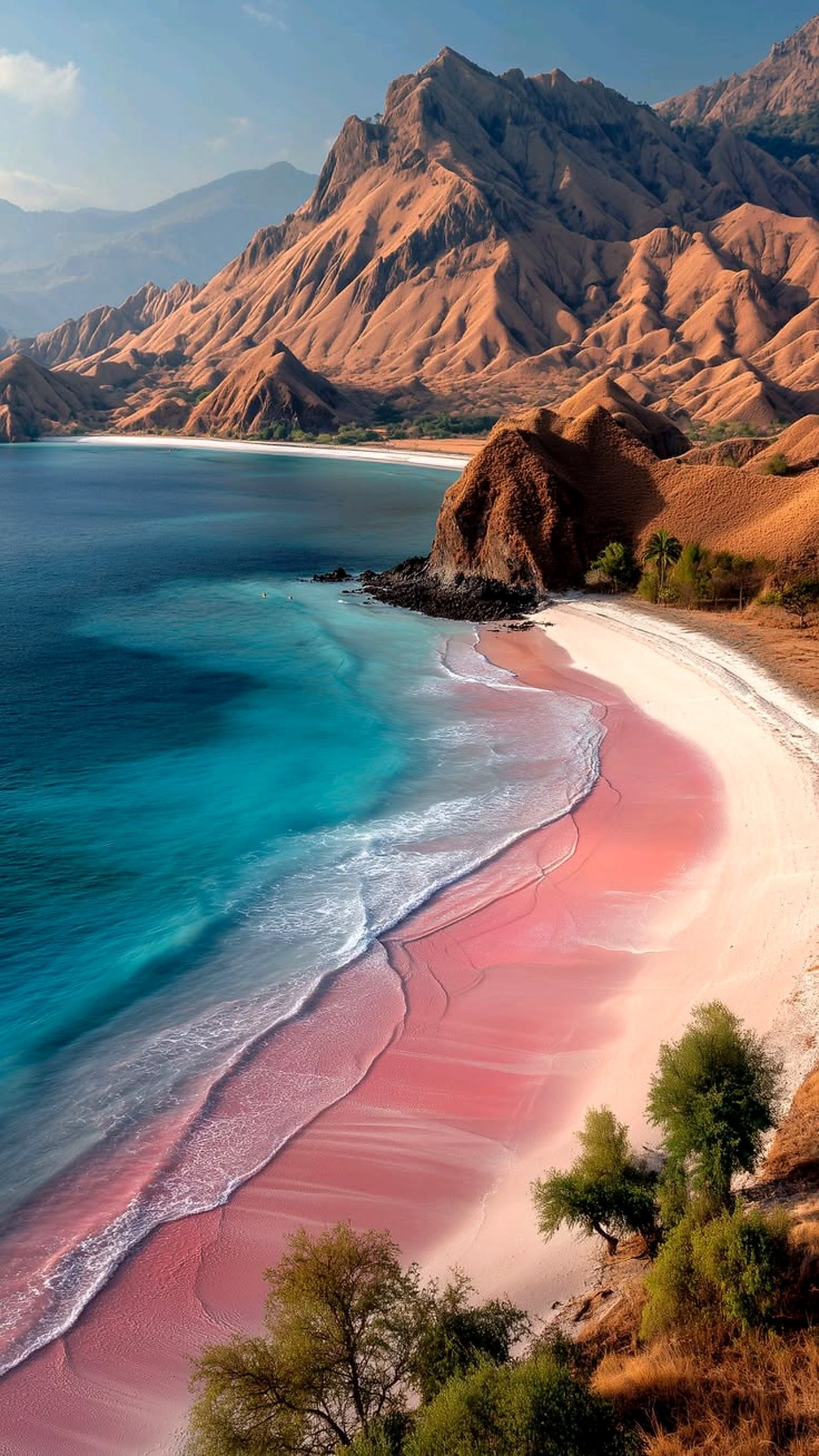
South of Rinca and Komodo, water from the Indian Ocean can drop to around 20°C and visibility falls as plankton blooms. Most southern diving is from liveaboards, because the crossing is long and the seas can be rough.
- Cannibal RockIn Horseshoe Bay off Rinca: a rock covered in sea apples, frogfish and nudibranchs. A macro site rather than a big-fish dive.
Manta Alley, off the south of Komodo Island, is the other famous southern name: a reef wall beside channels where mantas clean and feed, reachable only when sea conditions allow.
When is the best time to dive Komodo?
Komodo can be dived all year, but the north and south have opposite seasons. The north and centre are best from roughly April to November, with April to June bringing the calmest seas and clearest water. The south is best from about December to March, although that is also the rainy season. The shoulder months, March to May and September to November, give the widest access to both.
| Months | North and centre | South |
|---|---|---|
| April to June | Calm seas, often the clearest water of the year, around 27 to 29°C | Accessible early in the period, rougher as south-east winds build |
| July to September | Strong currents and lots of schooling fish; busiest season | Coldest water, can drop to around 20°C; south-east winds make some sites hard to reach |
| October to November | Warm water, fewer boats, mostly calm | Conditions improve as the winds shift |
| December to March | Rain and choppier crossings, northern sites more exposed | Best season for southern liveaboards; mantas busy at central sites |
January and February bring the heaviest storms, and flights into Labuan Bajo are occasionally diverted or cancelled, so leave a buffer day at each end. Whatever the month, a 3 mm full suit is enough in the north, while the south calls for 5 mm or a hooded vest.
When is manta season in Komodo?
Reef manta rays live in Komodo all year. The peak at Manta Point (Karang Makassar) comes roughly December to March, when up to 30 mantas have been recorded feeding together; Manta Alley sees them year-round, swell permitting. A 2022 PeerJ study with the Marine Megafauna Foundation and Murdoch University identified 1,104 individual reef mantas between 2004 and 2018, one of the largest known populations anywhere. Some travelled as far as Nusa Penida off Bali, about 450 kilometres away.
The study also found boat numbers at Karang Makassar and Mawan rose by about a third between 2014 and 2017, and the park capped boats at Karang Makassar in 2019. Stay low and still near cleaning stations, never chase or touch a manta, and on snorkel trips enter the water quietly rather than jumping in on top of the animals.
How do you dive Komodo's currents safely?
Dive with an experienced local operator who plans each site around the tide tables, carry a surface marker buoy, and follow the dive plan exactly. The same site can be gentle at one hour and dangerous an hour later. Many operators ask for Advanced Open Water, or an equivalent number of recent logged dives, before Castle Rock or The Cauldron, and assess you on easier sites first.
- Carry an SMB, a whistle and a signalling mirror or light. The current can carry a group far from the entry point.
- Watch for down-currents. If you get pulled down, move away from the reef edge as your guide briefed, and don't fight it by kicking straight up.
- Use reef hooks only on bare rock, never on living coral, and only if you have been shown how.
- Stay with the group on negative entries, and plan conservative profiles over several days of diving.
A good operator will change the plan when conditions look wrong, even if it means skipping Castle Rock.
How much are the Komodo National Park fees in 2026?
In 2026 foreign visitors pay a park entrance fee of around IDR 250,000 per person per day, plus a diving surcharge of around IDR 25,000 per person per diving day. Ranger, harbour and boat fees come on top, and most operators collect the total in cash. The park became a self-funding public service agency (BLU) in July 2026, and a new tariff regulation was still being prepared at the time of writing, so confirm when you book.
Since 1 April 2026, the park admits a maximum of 1,000 visitors per day across its main sites, after about 430,000 visitors in 2025. Every visitor must be registered in advance through the SiOra online system, normally by your operator, with passport details that match exactly. There are no walk-in tickets once a date is full, so book early for June to September. Drones need a separate park permit.
Day trips, liveaboards and getting there
Fly to Komodo Airport (LBJ), about 2 kilometres from Labuan Bajo, with several daily flights from Bali, taking a little over an hour, and from Jakarta. Day trips reach the central sites and, with an early start, the north, usually with two or three dives. Liveaboards of three to seven nights reach the remote north and south and dive at the right tide. Longer routes cross from Bali or Sumbawa, or continue along our Lesser Sunda Islands dive guide.
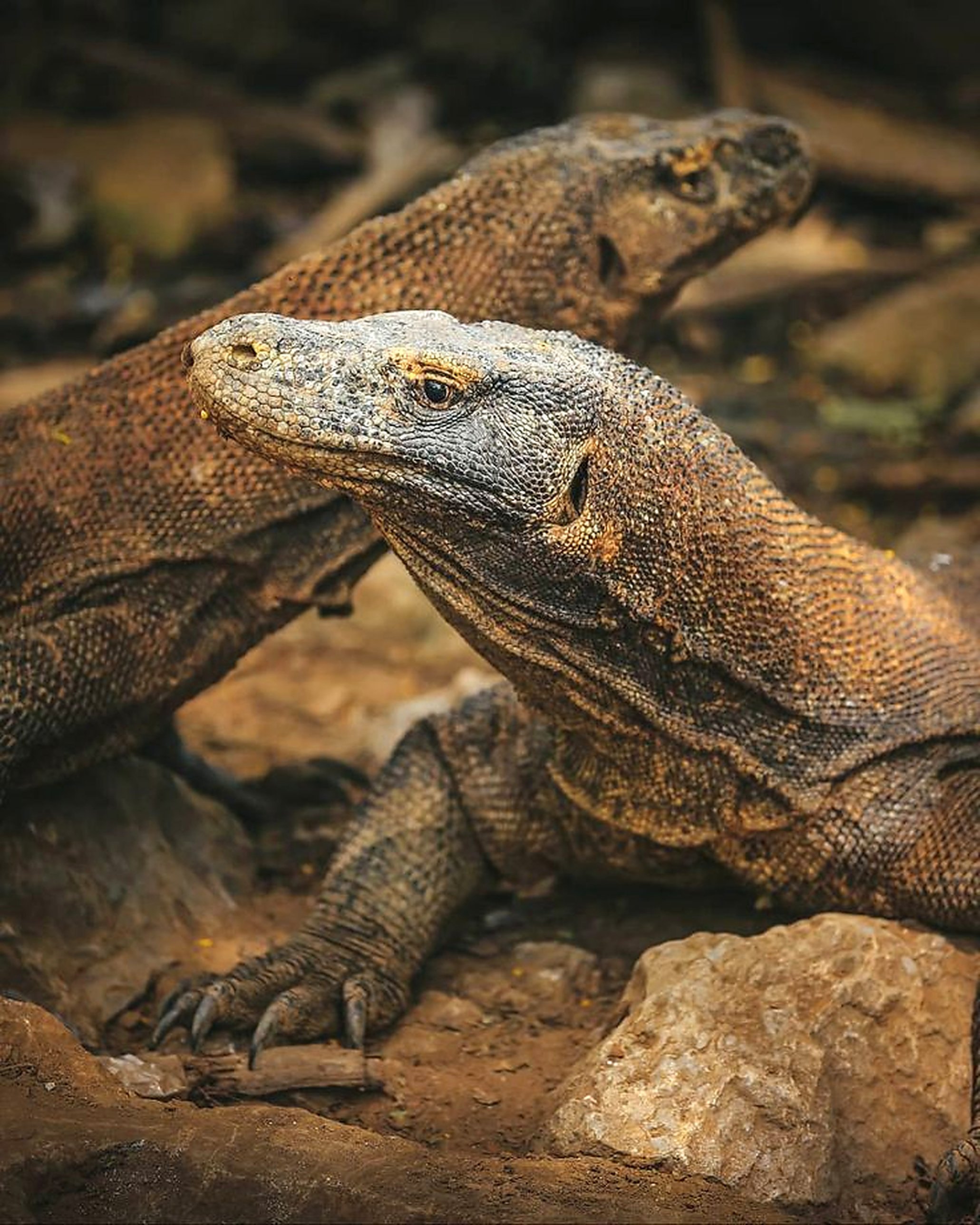
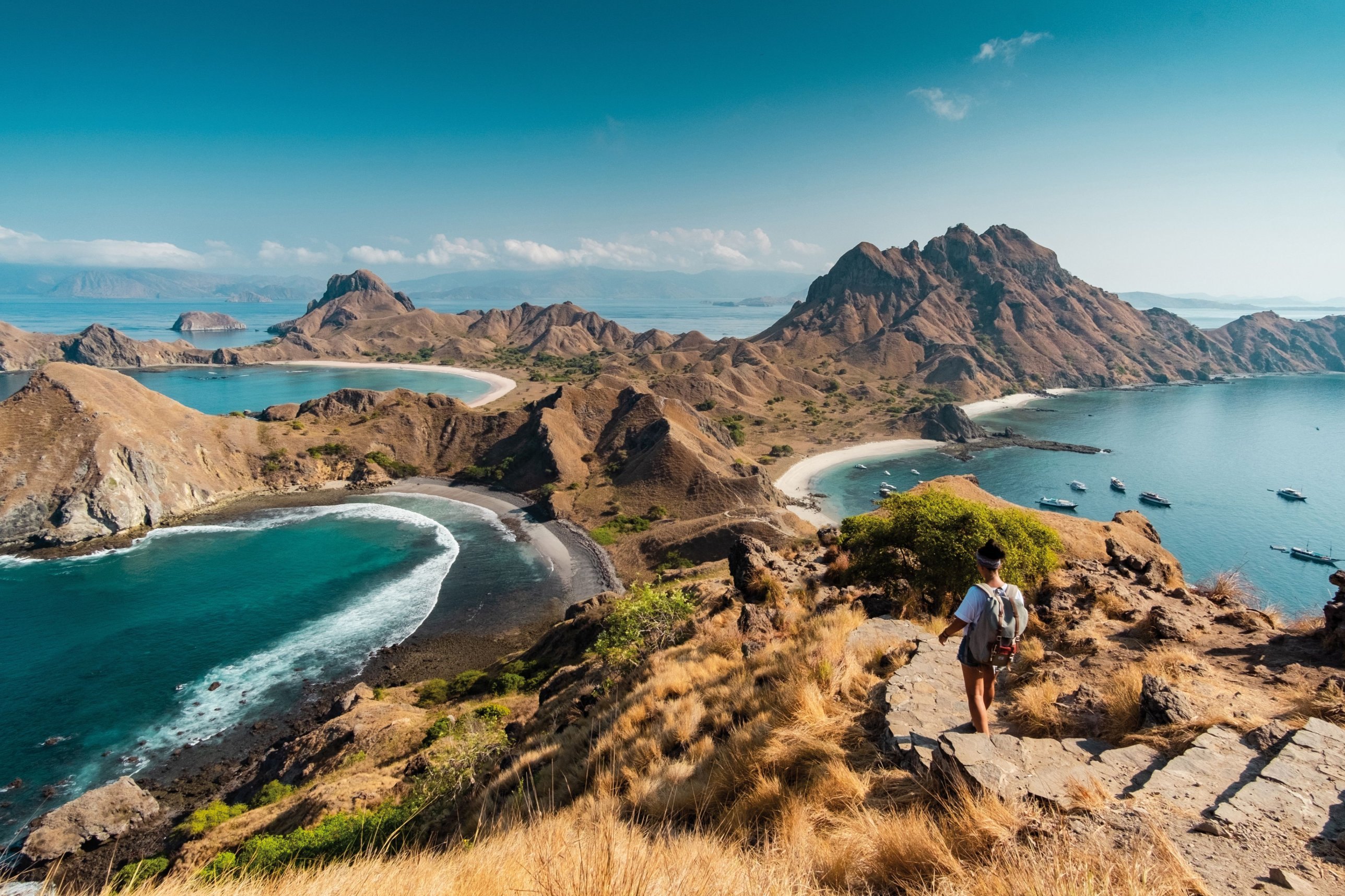
Plan at least 18 hours between your last dive and your flight out, and use the land day for the dragons on Komodo or Rinca, always with a park ranger, and the Padar viewpoint, best in the early session from 05:00. Allow three or four days of day trips for the centre and some of the north, or a week on a liveaboard for both.
Quick answers
Is Komodo diving good for beginners?
Partly. Pink Beach and the sheltered central reefs suit newly certified divers, but the northern sites, Batu Bolong and the southern channels need confidence in strong current.
Can you snorkel with mantas in Komodo?
Yes. At Manta Point, a shallow site in the centre of the park, even snorkellers can see them on a good day.
How many Komodo dragons are there?
UNESCO puts the population at around 5,700, living on Komodo, Rinca, Gili Motang and parts of western and northern Flores.
Our Discover Indonesia: Komodo guide and our Flores and Komodo guide cover the land side of the trip in more depth. Browse all our guides, or compare regions in our overview of diving in Indonesia.
Facts checked October 2026. Park fees, the daily quota and SiOra booking rules are being adjusted through 2026; confirm them with Balai Taman Nasional Komodo or your licensed operator before you travel, and check flight schedules with the airlines.
- Komodo National Park (UNESCO World Heritage Centre)
- Residency, movement patterns, behavior and demographics of reef manta rays in Komodo National Park (PeerJ, 2022)
- Komodo National Park limits tourist visits to 1,000 per day (Antara, April 2026)
- BTNK tetapkan kuota 1.000 wisatawan per hari di TN Komodo (Antara, April 2026)
- Komodo National Park quota update, September 2026 (Komodo Luxury)
- Komodo and Raja Ampat park fees 2026 (Neptune Liveaboards)
- Park fees and visitor quota 2026 (Komodo Guide)
- Diving in Komodo (Bluewater Dive Travel)
- Best time of year to dive Komodo and flights to Komodo Airport (Dive Tribe Komodo)
- Komodo National Park (Wikipedia)
- Reef data: Allen Coral Atlas, CC BY 4.0
- Map data © OpenStreetMap contributors, ODbL