Wakatobi takes its name from four islands: Wangi-Wangi, Kaledupa, Tomia and Binongko. It sits far off the usual travel routes in Southeast Sulawesi, which is a big part of why its reefs are among the best in Indonesia. This guide covers the dives, the seasons and the practical side of getting there.
Where is Wakatobi, and why do divers travel so far for it?
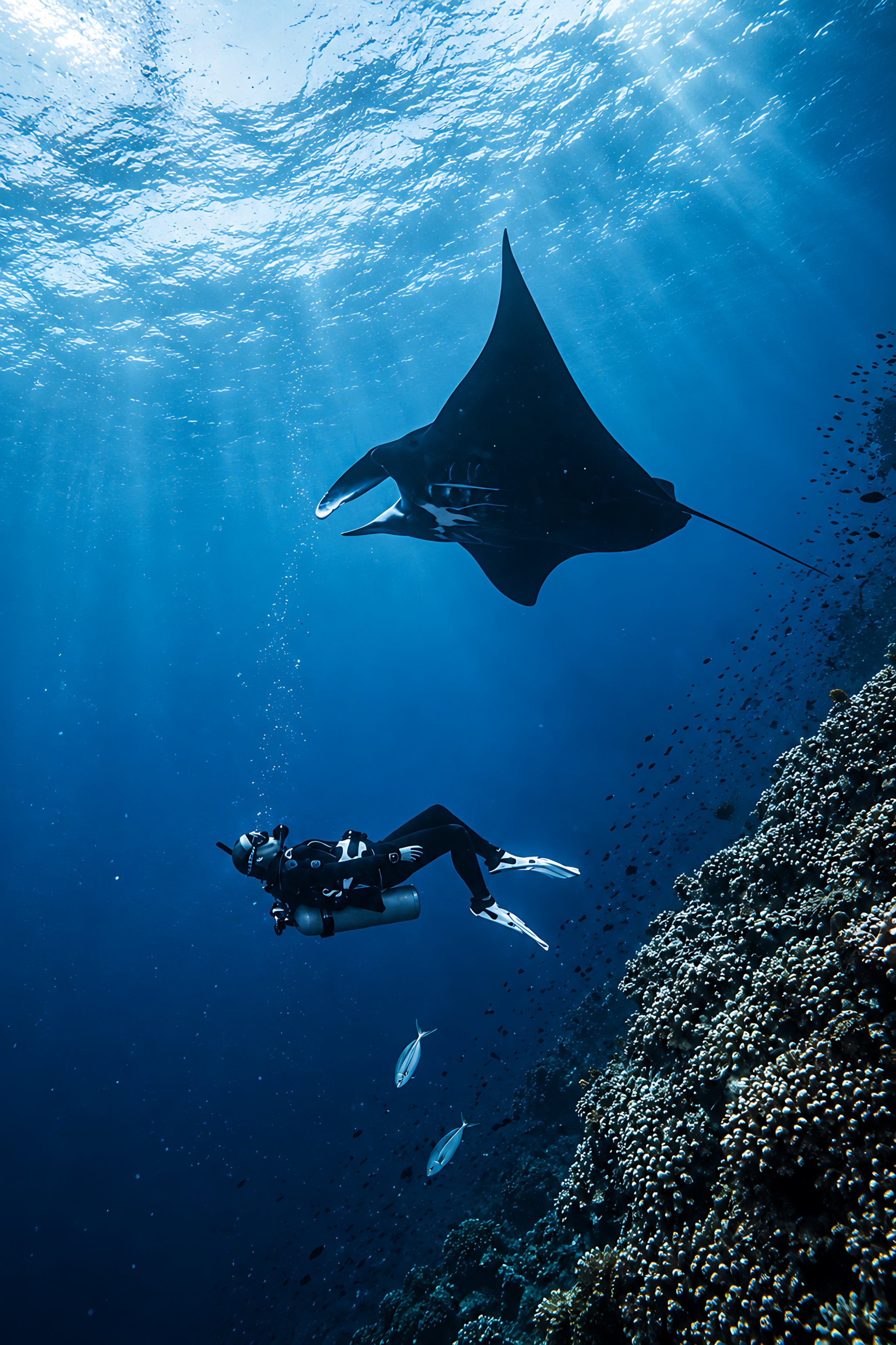
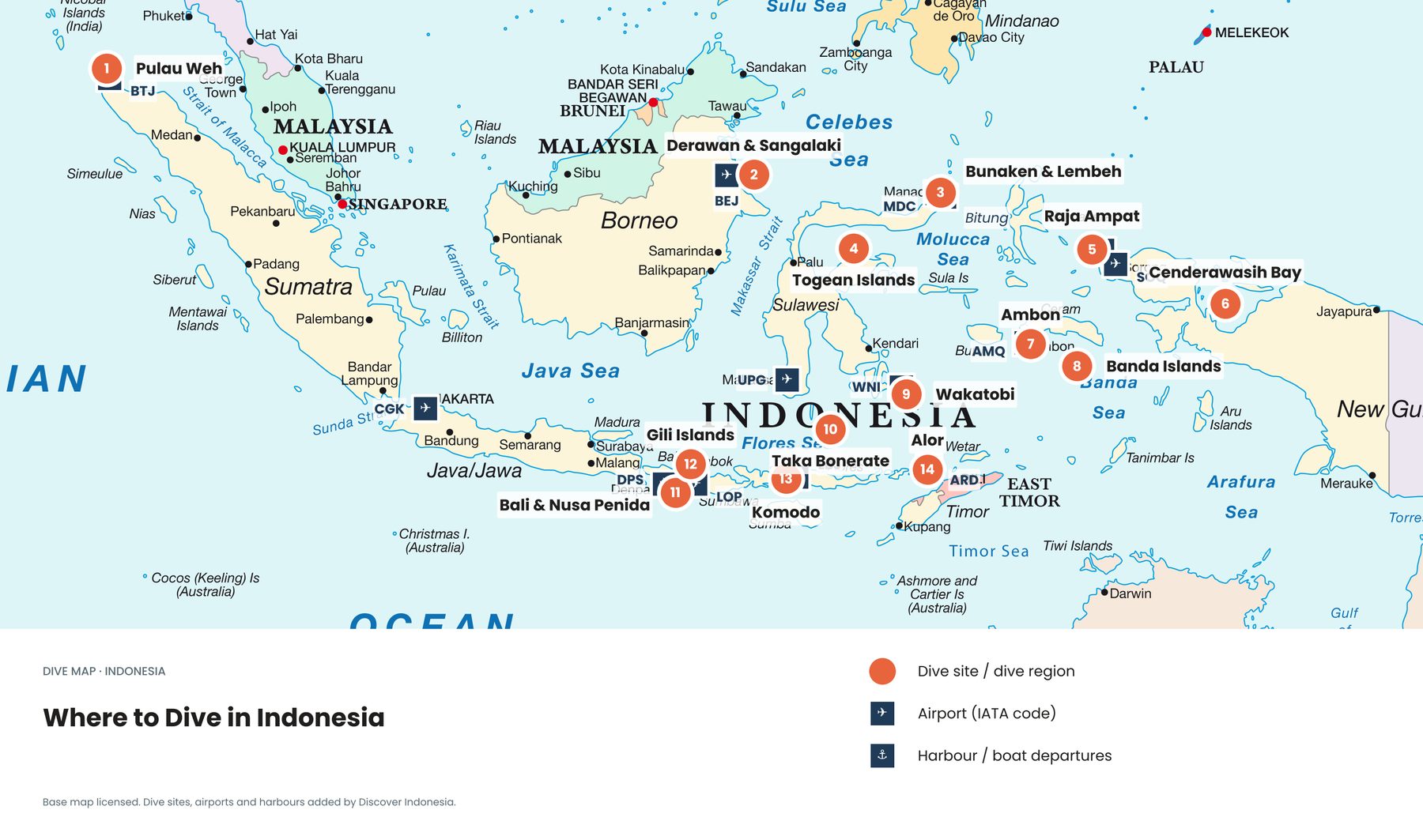
Wakatobi is a chain of islands off the southeast tip of Sulawesi, where the Banda Sea meets the Flores Sea. The whole regency is a marine national park of about 1.39 million hectares inside the Coral Triangle, and divers come for clear water, steep walls and reefs that start in the shallows right off the islands. First designated in 1996, it is the third-largest marine park in Indonesia, a UNESCO biosphere reserve since 2012 and an ASEAN Heritage Park since 2017.
The appeal is partly distance. Wakatobi is a long way from Bali, Jakarta and the big rivers that cloud reefs closer to Java and Borneo. Fewer boats, fewer divers and deep water on every side mean visibility is often excellent.
Which island should you base yourself on?
Wangi-Wangi, the northernmost island, is the gateway: it holds Wanci, the regency capital, Matahora airport and the widest choice of guesthouses, small dive hotels and transport. Most independent travellers spend at least their first and last night here. Kaledupa is quieter and greener, with old forts and weaving villages, and off its coast lies Hoga, long used by Operation Wallacea as a base for marine research.
Tomia is where Wakatobi's reputation as a dive destination was built. It and its neighbours are ringed by reefs and walls, and the long-established Wakatobi Dive Resort operates just off the island, alongside simpler homestays and local operators. Binongko, the remote southern outpost known as the island of blacksmiths, is the least visited by divers. Local boats between the islands are irregular, so pick one base, or two at most.
The dive sites, north to south
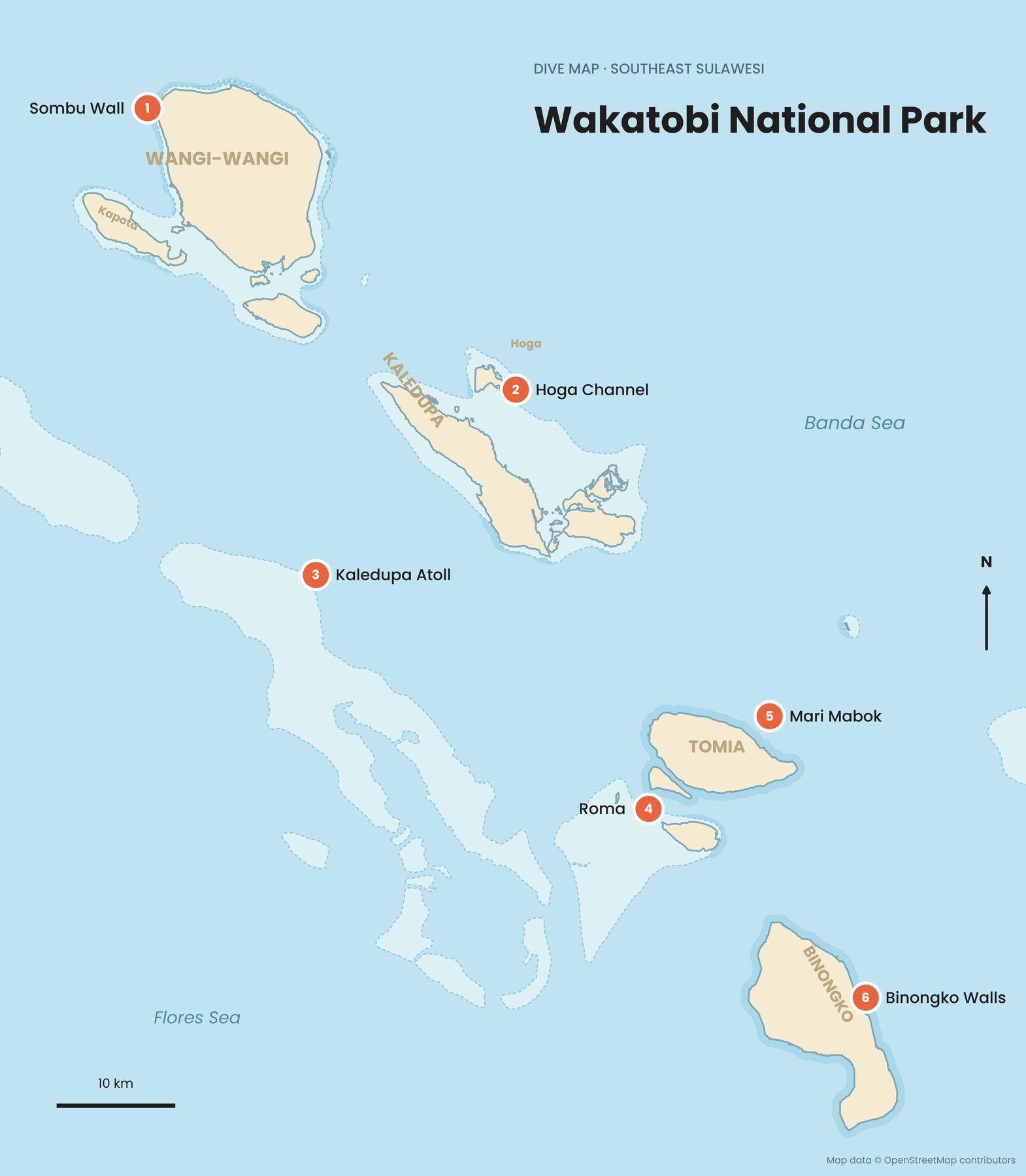
Operators count well over 40 named dive sites. These six areas, numbered as on the map, give a good picture of the chain.
- Sombu Wall, Wangi-WangiA natural first dive for travellers on the main island, and a good place to check your weighting after a long journey.
- Hoga ChannelSloping reefs and walls between Kaledupa and Hoga. The no-take area set up here in 2001 with Bajau communities had the highest live coral cover in surveys of the Kaledupa area.
- Kaledupa AtollShallow reef tops for snorkelling and outer edges that drop into deep water, close to 50 kilometres long.
- Roma, TomiaSubmerged pinnacles with current, schooling fish and the chance of larger animals. Dive with a guide who knows when the tide turns.
- Mari Mabok, TomiaWalls and pinnacles thick with hard and soft corals. Rewards slow diving.
- Binongko WallsSteep walls facing the open Banda Sea, rarely dived and reachable only in calm weather.
If you are new to wall diving, the first days around Wangi-Wangi or Hoga are a gentle warm-up before the more exposed sites in the south, and resort house reefs on Tomia offer easy shore diving.
How healthy are Wakatobi's reefs?
Many are in very good condition by Indonesian standards, especially the outer walls and actively protected areas. But fishing pressure is high, and the healthiest reefs are usually those with working local agreements and regular patrols. Between 2001 and 2005, grouper numbers inside the Hoga no-take area grew by about 31 percent a year, while the heavily fished reef near Sampela was dominated by dead coral and sand. No-take zones cover only a few percent of the park.
A 2003 survey recorded 396 coral species, and some 942 fish species are reported for the park, so treat round numbers like "750 coral species" with caution. Some resorts pay villages for exclusive no-fishing rights over nearby reefs, which is debated, so ask any operator how they work with local communities. For the 2023 to 2025 bleaching event, see our article on the 2024 ocean heatwave.
Who are the Bajau of Wakatobi?
The Bajau, also written Bajo, are a seafaring people found across eastern Indonesia, Malaysia and the Philippines. They traditionally live in stilt houses over the reef flats and fish for a living, and in Wakatobi they live mainly around Wangi-Wangi and Kaledupa, a little under 8 percent of the regency's population. They were often left out of park planning, which bred distrust; the Hoga no-take area works because it was set up with them, not imposed on them.
A village visit is easy to arrange from Kaledupa, Hoga or Wangi-Wangi. Go with a local guide, ask before photographing people and homes, and buy food or crafts rather than handing out sweets or money.
How do you get to Wakatobi?
Most travellers fly to Makassar or Kendari in Sulawesi, then take a small plane to Matahora airport (WNI) on Wangi-Wangi. Recent listings show service from both, usually on turboprops and often not every day, but airlines and frequencies change often, so check current schedules before you book anything else and leave a buffer. Alternatively, fly to Bau-Bau on Buton and take the overnight public boat to Wanci; boats also run from Kendari.
Wakatobi Dive Resort and its liveaboard Pelagian fly guests on charters from Bali to a private airstrip on Tomia. It is the quickest way in, but an extra cost and only for their guests.
Resort, homestay or liveaboard?
A resort on Tomia or Wangi-Wangi suits most divers, with daily boat dives, consistent guides and shore diving; the high-end scene centres on Tomia, while Wangi-Wangi has more mid-range and budget dive hotels. Homestays and local operators are the cheapest option and put more money into local communities, but check the gear and safety briefing. Liveaboards reach the remote walls, sometimes as part of a longer Banda Sea route; departures are limited and some start or finish elsewhere, so read the ports before booking flights.
Card payment and ATMs are limited outside Wanci, so carry enough rupiah for boats, homestays and park fees, and ask whether the park fee is already included. Bring reef-safe sunscreen, a spare mask strap and a dive computer, and carry a surface marker buoy for tide-dependent sites like Roma.
When is the best time to dive Wakatobi?
Wakatobi can be dived for most of the year, with the most settled conditions from around March to December. January and February are the wettest months, with rain and rougher crossings. Water is warmest, around 29 to 30°C, towards October and coolest, around 25°C, in July and August, when windier days bring choppy crossings but good schooling fish. Many operators consider April to May and September to November the sweet spot. Visibility often reaches 20 metres and much more on the outer walls.
| Months | Conditions | Good for |
|---|---|---|
| January to February | Wet season, more rain and rougher crossings | Flexible travellers; some operators reduce trips |
| March to June | Settling weather, warm water | All-round diving and island hopping |
| July to August | Cooler water, stronger southeast winds | Schooling fish; expect some choppy days |
| September to December | Calm seas, warmest water by October | Peak season for resorts and liveaboards |
Quick answers
What does Wakatobi mean?
It is made from the first letters of the four main islands: Wangi-Wangi, Kaledupa, Tomia and Binongko.
Is Wakatobi good for snorkelling?
Yes. Many reefs start in very shallow water, especially around Hoga, Kaledupa atoll and Tomia, and several resorts have house reefs you can snorkel from the beach.
Is Wakatobi suitable for beginner divers?
Yes, with the right site choice. Sheltered walls and house reefs are fine for new divers, while current-swept pinnacles like Roma are better left until you have more experience.
How many days do I need in Wakatobi?
At least a week including travel. The journey can take a day each way, and four or five diving days lets you see more than one area.
Our Sulawesi diving overview covers the island's other regions, and the atolls of Taka Bonerate lie across the Flores Sea. Our Discover Indonesia: Wakatobi guide covers where to stay and how to string the connections together; find all our titles on the guides page.
Facts checked October 2026. Flight routes into Matahora, boat schedules and park fees change often; confirm them with the airlines, your dive operator and Wakatobi National Park (Balai Taman Nasional Wakatobi) before you travel.
- Wakatobi National Park (ASEAN Centre for Biodiversity)
- Wakatobi National Park (Wikipedia, summarising park and Operation Wallacea research)
- Tourism minister to officially inaugurate Wakatobi Wave festival (Antara)
- Wakatobi, Southeast Sulawesi: Travel Guide Book 2025 (Ministry of Foreign Affairs of Indonesia)
- Matahora Airport (Wikipedia)
- Wakatobi urges airlines to fly direct from Bali (Wonderful Indonesia)
- Wakatobi liveaboard diving (Liveaboard.com)
- Map data © OpenStreetMap contributors, ODbL