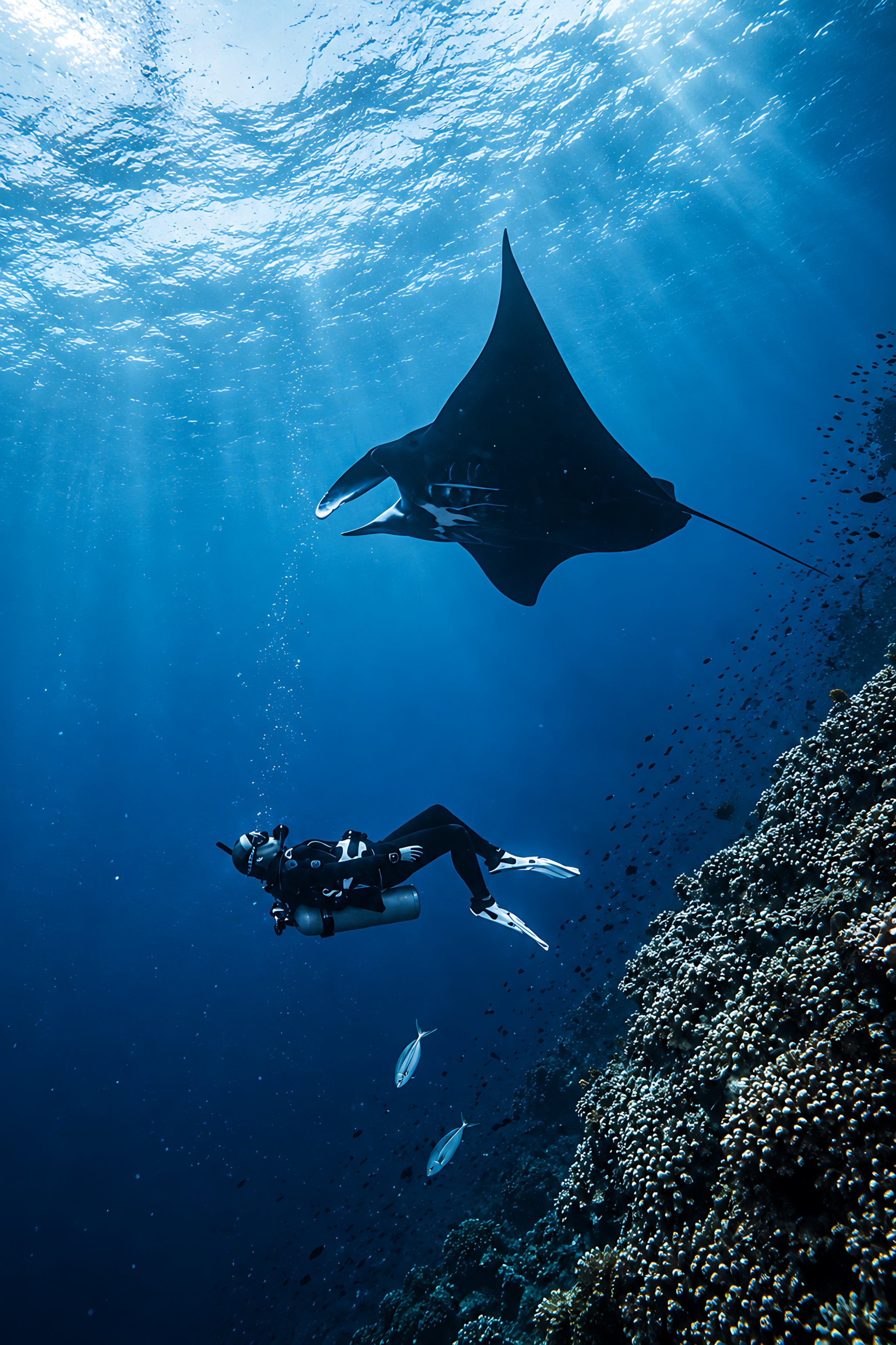
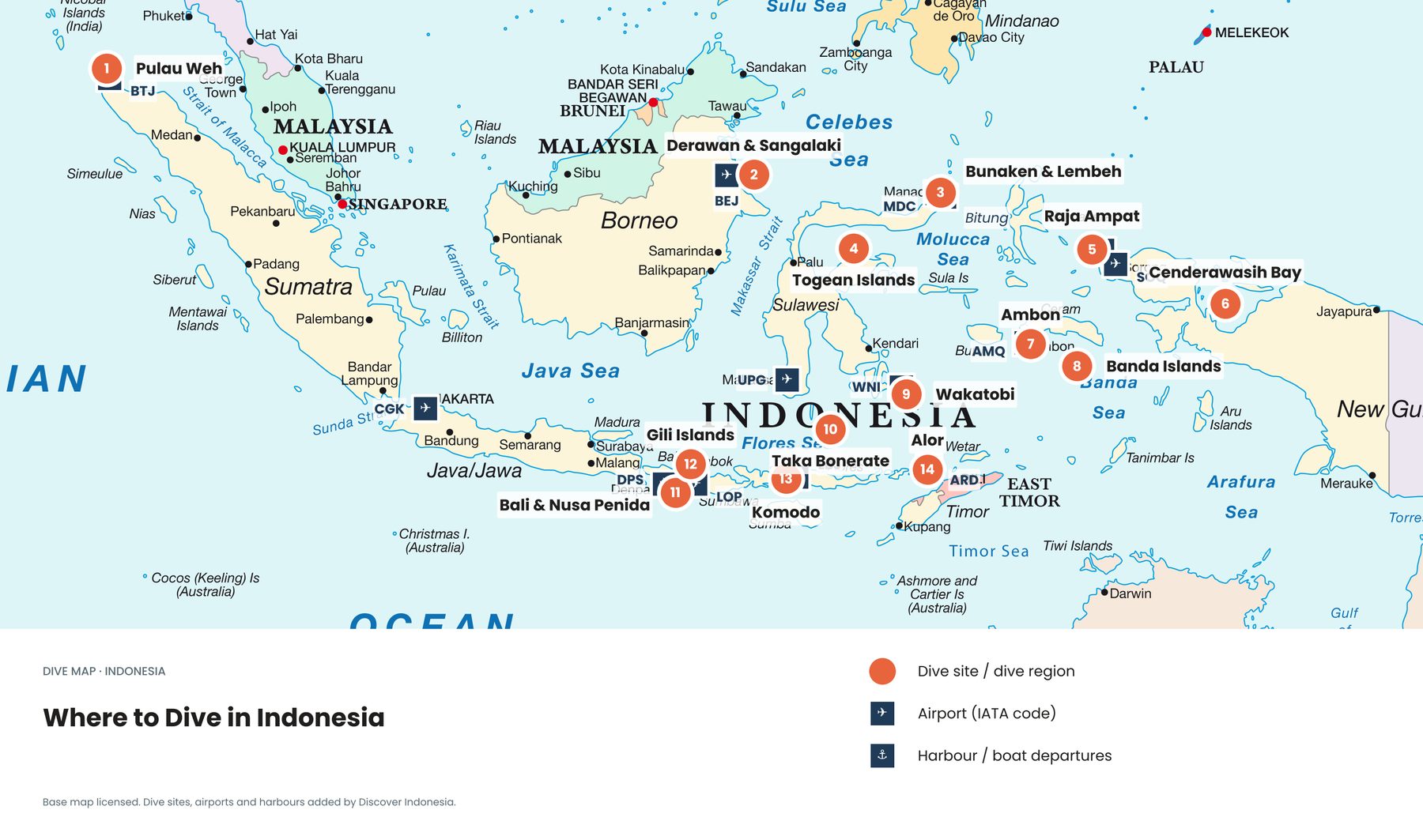
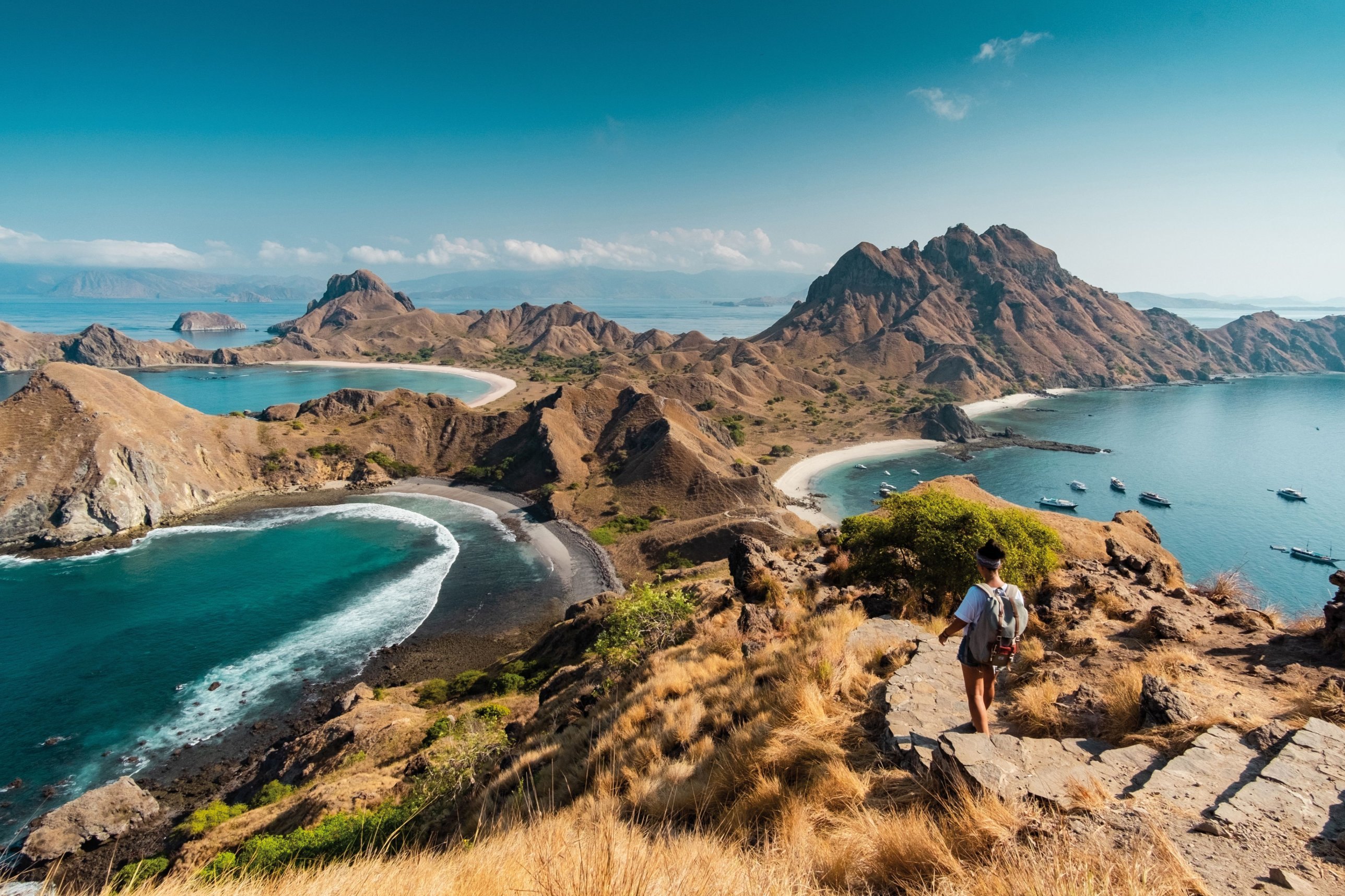
At the eastern end of the Lesser Sunda Islands, Alor sits on one of the main exits of the Indonesian Throughflow. The water is cold, clear and full of life, the currents are serious, and you'll rarely see another dive boat. Here is how the strait works, which sites to dive and how to get there.
Why is diving in Alor so good?
Because of moving water. Alor sits beside the Ombai Strait, one of the three main gateways through which Pacific water leaves Indonesia for the Indian Ocean, and the narrow Pantar Strait between Alor and Pantar funnels part of that flow past its reefs. The current brings nutrients, cold upwellings and often excellent visibility, and it keeps the reefs healthy.
Oceanographers call this flow the Indonesian Throughflow. The INSTANT programme measured an average of about 4.9 million cubic metres of water per second through the Ombai Strait between 2004 and 2006, almost twice the flow through the Lombok Strait next to Bali. The other half of the answer is remoteness: Alor is roughly 1,000 kilometres east of Bali, and its 50 or more dive spots are shared by only a handful of dive centres and visiting liveaboards.
How cold is the water in Alor?
Usually around 27 to 28°C at the surface, but much colder at times. When deep water wells up, especially at sites in the south of the strait facing the Savu Sea, temperatures drop to around 23 to 24°C, and some operators report colder readings. The change often comes as a sharp thermocline in the middle of a dive: you can start in warm, blue water and finish in green, cold water a few metres deeper.
That cold water carries the nutrients that feed plankton, filter feeders and the fish that eat them. Wear more neoprene than you think, a 5 mm wetsuit or a 3 mm suit with a hooded vest, and bring a warm layer for the boat; surface intervals in the wind after a cold dive are when people start to shiver.
The best dive sites in Alor
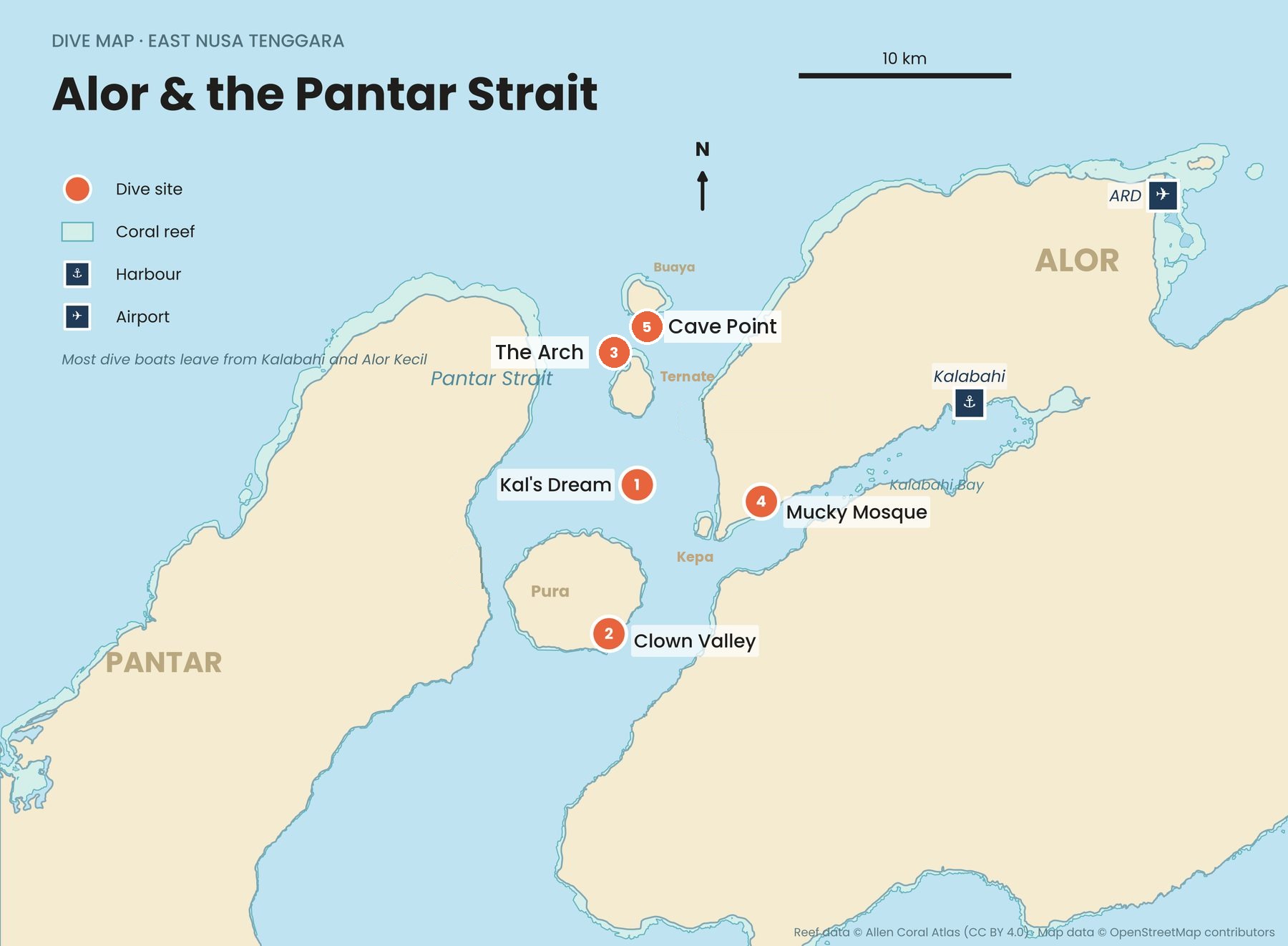
Diving in Alor falls into three types: current-swept pinnacles and walls in the strait, coral slopes around the small islands of Pura, Ternate and Kepa, and black-sand muck diving in Kalabahi Bay. The five sites below match the numbers on the map.
- Kal's DreamA submerged pinnacle off the island of Kepa, in the strait's strongest current. Napoleon wrasse, dogtooth tuna, trevally and reef sharks, with hammerheads reported on some early-morning dives. Experienced divers only, and often too strong to dive.
- Clown ValleyA slope off Pura, known locally as Apuri, covered in anemones and the clownfish living in them. One of Alor's signature dives.
- The ArchOff Ternate Island: a large underwater arch at around 20 to 30 metres, framed by whip corals and gorgonian fans, usually in very clear water.
- Mucky MosqueMuck diving in Kalabahi Bay, a sheltered spot for small creatures in the volcanic sand. Also a favourite night dive.
- Cave PointAn easy wall dive off Buaya Island at the northern end of the strait, with small caves and overhangs between about 20 and 35 metres.
Kal's Dream is the dive people talk about, and the one most often called off. On a strong tide the current can make it impossible to hold on, so guides wait for a manageable flow, then drop divers in a fast negative entry straight to the top of the reef. When it works, you see the whole food chain in one place. Use a reef hook only where your guide shows you, carry a surface marker buoy, and treat any instruction to abort as final.
On the slopes of Pura, almost every surface is covered in bulb-tentacle sea anemones, most of them home to Clark's anemonefish, and bubbles of volcanic gas rise from the seabed. Cave Point, with nudibranchs and banded sea kraits in the cracks, is a good first dive to check your weighting before the stronger sites. Ask local guides about The Cathedral at Motolang, Sharks Galore, the Great Wall of Pantar at Bama and Coconut Grove.
Muck diving in Kalabahi Bay
Kalabahi Bay is a long, sheltered inlet that cuts deep into Alor, with the town of Kalabahi at its head. Its black volcanic sand and rubble hold the small, odd animals that macro photographers chase: frogfish, rhinopias, leaf scorpionfish, ghost pipefish, seahorses, mandarinfish, snake eels and many nudibranchs. Mucky Mosque is the best known of these sites. The silt lifts with one careless fin kick, so keep your fins high and frog-kick. Beangabang Bay on Pantar, with hot springs and volcanic sand, offers similar diving across the strait.
Is Alor suitable for beginner divers?
Mostly not. Many of Alor's best sites have strong, changeable currents, deep profiles and negative entries, and most operators recommend Advanced Open Water certification and real experience in current. One established liveaboard asks for Advanced Open Water or Deep Diver certification and at least 50 logged dives. Some sheltered sites, including the muck dives in Kalabahi Bay and gentler walls, suit less experienced divers with a good guide. If you are newer to diving, build up your experience on drift dives at Nusa Penida or Komodo first.
Good local operators schedule the strait sites around slack water and will change plans on the boat. Carry a surface marker buoy and an audible signal on every dive, consider nitrox for deep, repeated profiles, and remember how far you are from help: make sure your dive insurance covers evacuation, and dive conservatively.
When is the best time to dive Alor?
The main season runs roughly from April to November, when the dry season brings calmer seas and the best visibility, often 20 to 30 metres. The rainy season, around December to March, can make some sites harder to reach and cut visibility below 15 metres, and some dive centres close for part of it. September to November is often recommended for the coldest, richest water. Sources disagree a little on the exact peak, which reflects how much conditions vary from year to year.
Getting there and where to stay
Fly to Kupang in West Timor, then take a short connecting flight on a small propeller plane to Alor's Mali Airport (ARD), near Kalabahi. Kupang has domestic connections from Bali, Jakarta, Surabaya and Makassar, so plan on a full day of travel. Flights here can be irregular or cancelled: arrive in Kupang a day early if you have a fixed start date, and expect to pay excess baggage for dive gear. Ferries also run from Kupang and from Maumere on Flores via Lembata and Pantar, but schedules change often.
Land-based diving is spread across Kalabahi town and the shores of the bay, Alor Kecil and the small island of Kepa, and northern Pantar. Kepa and Alor Kecil put you closest to the strait sites. Liveaboards reach sites that are a long ride from shore; many start or finish in Maumere, some in Kupang or Labuan Bajo, and longer trips link Alor with Komodo or the Banda Sea. Bring spare masks, straps and batteries, as dive shops are scarce.
Quick answers
How many days do I need in Alor?
At least a week on the ground, plus buffer days for flights. The journey is long, and current sites like Kal's Dream need the right conditions.
What wetsuit do I need for Alor?
A 5 mm wetsuit, or a 3 mm suit with a hooded vest, because upwellings can drop the water to around 23 to 24°C.
Can you see whales in Alor?
Whales and dolphins are seen in the strait, with operators reporting more whale sightings later in the dry season, but treat them as a bonus, not a promise.
What is there to do in Alor besides diving?
Visit Kalabahi's Museum of a Thousand Mokos, with Alor's bronze kettledrums and hand-woven textiles, and the traditional village of Takpala in the hills. Dress modestly and ask before photographing people.
Alor fits naturally after Flores or Komodo; see our overview of diving the Lesser Sunda Islands and all of Indonesia's dive regions. Our upcoming Discover Indonesia diving guide and our Coral Triangle book cover Alor in more depth. Browse all our guides.
Facts checked October 2026. Flight schedules, operators and seasonal conditions in Alor change often; confirm details with your dive operator or liveaboard and with the airline before you travel.
Sources
- The Indonesian Throughflow during 2004–2006 as observed by the INSTANT program (Gordon et al. 2010, Dynamics of Atmospheres and Oceans)
- Alor Island (Wonderful Indonesia, Ministry of Tourism)
- Diving Alor and Nusa Tenggara travel info (Starfish.ch)
- Diving in Alor and Alor's top dive sites (Zublu)
- Alor liveaboard itinerary (Emperor Divers)
- Alor liveaboard diving (Liveaboard.com)
- Scuba diving in Alor: dive logs (The Occasional Traveller)
- Reef data (Allen Coral Atlas, CC BY 4.0)
- Map data (OpenStreetMap contributors, ODbL)