Bali is one of the few places on Earth where you can walk off a beach onto a Second World War shipwreck in the morning and drift past manta rays in the afternoon. Here are the sites worth your time, mapped and explained, with when to go and which ones demand real experience.
Is Bali good for diving?
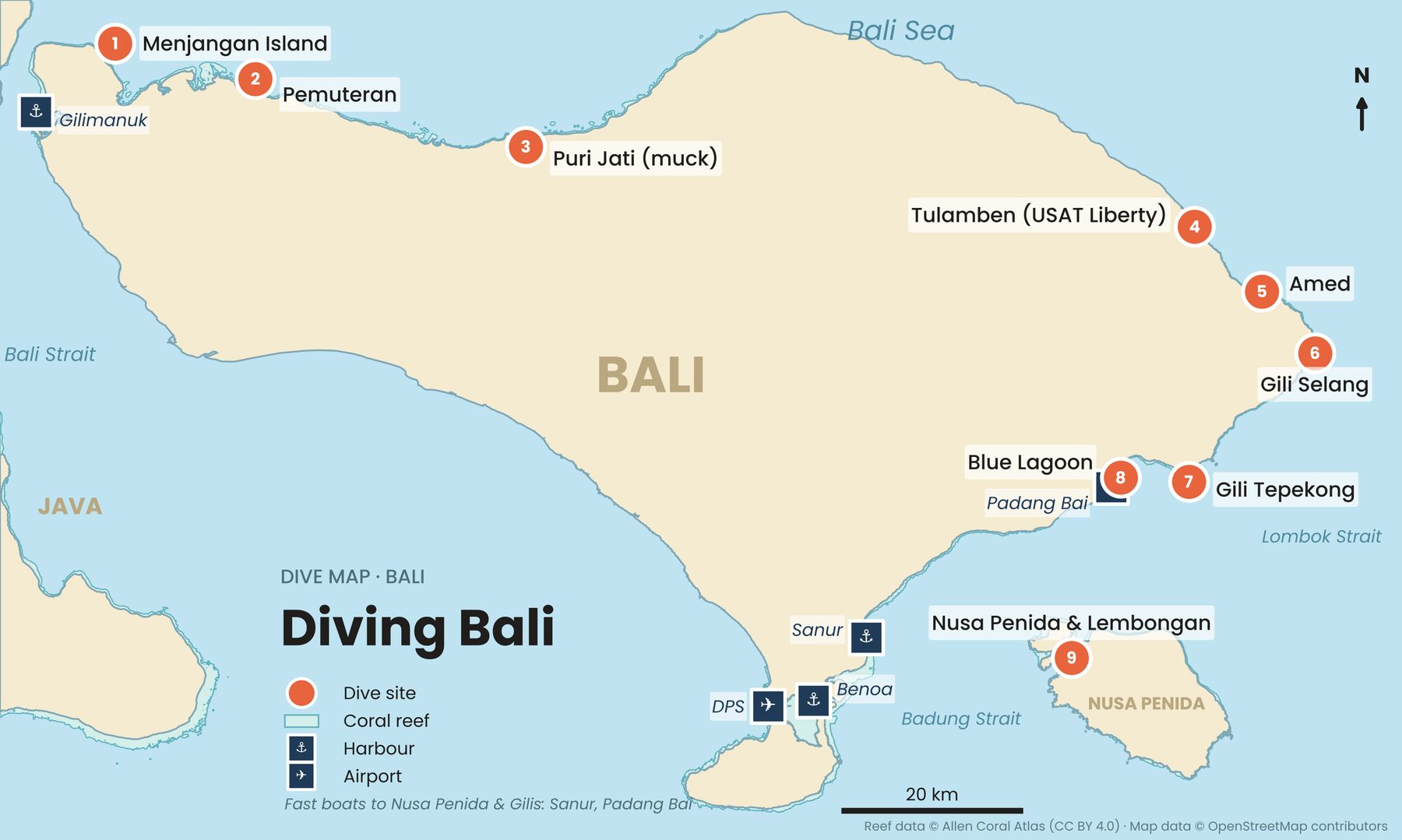
Yes, and unusually varied for one island: a beach-entry wreck at Tulamben, easy reefs at Amed and Padang Bai, calm walls at Menjangan, black-sand muck diving in the north, and strong drifts with manta rays and oceanic sunfish around Nusa Penida. Bali sits on the western edge of the Coral Triangle, and the Lombok Strait off its east coast is a main exit of the Indonesian Throughflow. That flow feeds the reefs and makes some sites genuinely demanding. Numbers below match the map.
| Area | Best for | Level | Getting there |
|---|---|---|---|
| Menjangan, Pemuteran, Puri Jati | Calm walls, restored reefs, muck | All levels | Long drive to the northwest; stay in Pemuteran |
| Tulamben, Amed | USAT Liberty wreck, shore diving | All levels | Drive to the northeast coast; stay locally |
| Padang Bai | Easy bays; Tepekong and Biaha for currents | Beginner to advanced | About 56 km from the airport |
| Gili Selang, Gili Tepekong | Big fish, strong currents | Experienced | Boat from Amed or Padang Bai |
| Nusa Penida and Lembongan | Manta rays, mola mola, drift diving | Intermediate to advanced | Fast boat from Sanur, about 30 to 45 minutes |
The north and west: calm water, easy diving
Bali's north coast faces the Bali Sea, sheltered from the Indian Ocean swell, and currents are mild.
- Menjangan IslandInside West Bali National Park, with some of Bali's best-preserved coral and walls that start in the shallows. Good for snorkellers too.
- PemuteranA quiet bay known for its Biorock reef restoration, and the main base for Menjangan.
- Puri Jati (PJ)Black sand and almost no coral, but frogfish, octopus, seahorses and nudibranchs. A favourite of photographers.
Boats at Menjangan moor on buoys rather than anchoring, one reason the coral is in such good shape; in water this clear it is easy to drift deeper than planned along the wall, so watch your computer. In Pemuteran bay, the Karang Lestari project grows coral on steel Biorock frames charged with a low electric current, and you can snorkel over them from the beach. Puri Jati and Secret Bay at Gilimanuk are shallow muck dives that reward patience and good buoyancy.
The east coast: wrecks and walls
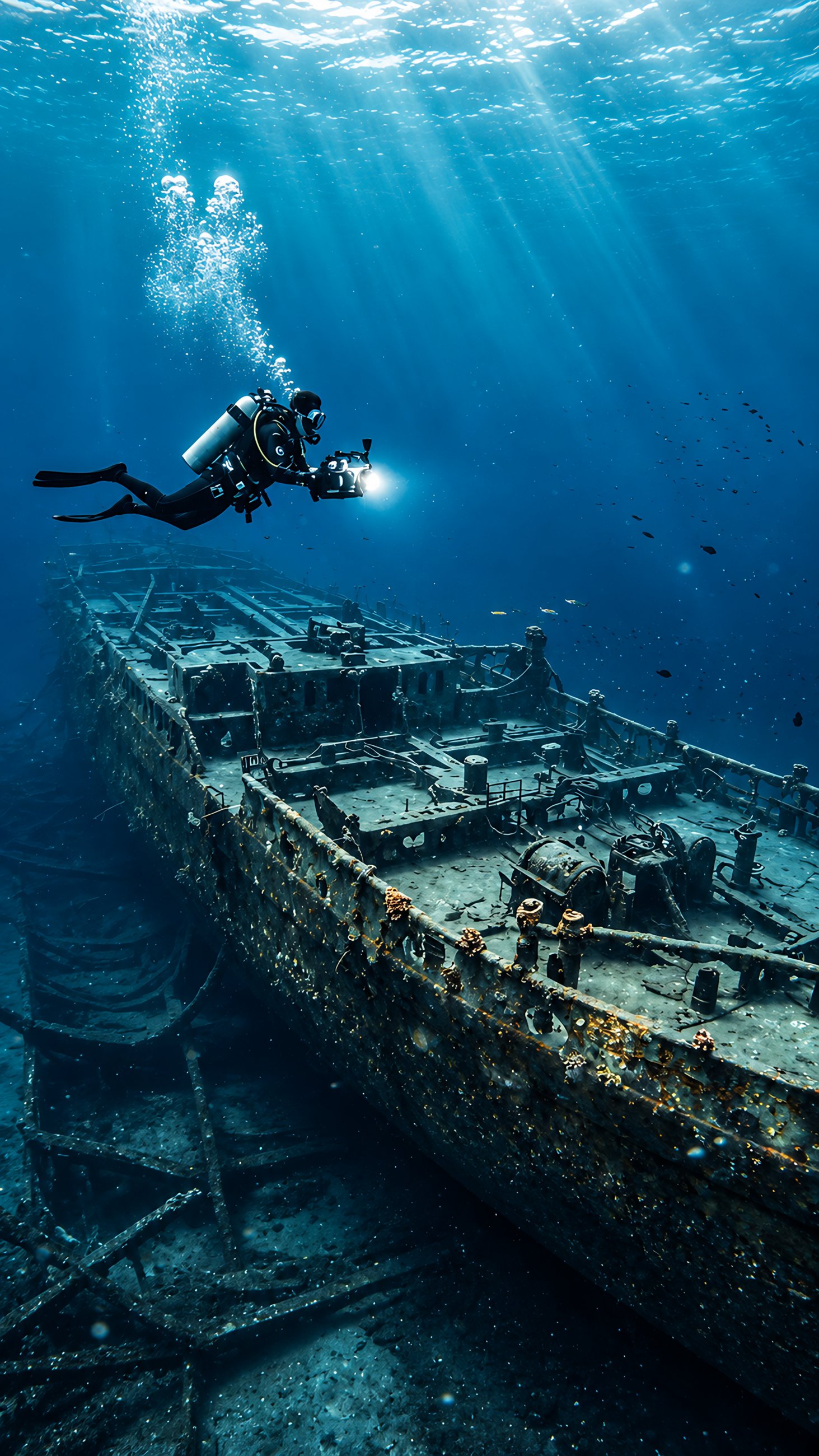
- Tulamben and the USAT LibertyBali's most famous dive: a Second World War wreck you walk to from the beach.
- AmedQuiet fishing villages with easy reefs straight off the beach, including a small shallow wreck.
- Gili SelangBali's easternmost point. Beautiful coral, but strong, unpredictable currents. Experienced divers with a local guide.
- Gili TepekongA small rock off Candidasa with cold upwellings, strong currents and big fish. Experienced divers.
- Blue Lagoon, Padang BaiA shallow, sheltered bay beside the ferry harbour. Ideal for training dives and snorkelling.
Amed makes an easy base for both its own reefs and Tulamben. At Gili Selang the current can switch direction or turn downwards with little warning, so save it for calm days. Padang Bai, the ferry port for Lombok, has bays that became part of a marine protected area in 2017, though currents can pick up at tide changes. Offshore, Tepekong and Biaha are boat dives with negative entries and sharp temperature drops. Log several drift dives before you book them.
How do you dive the USAT Liberty wreck?
You walk in from the beach at Tulamben and swim about 25 to 40 metres out. The wreck lies on its side on a sandy slope, from about 5 metres at its highest point to about 30 metres at its deepest, so beginners can explore the top while experienced divers work the deeper sections.
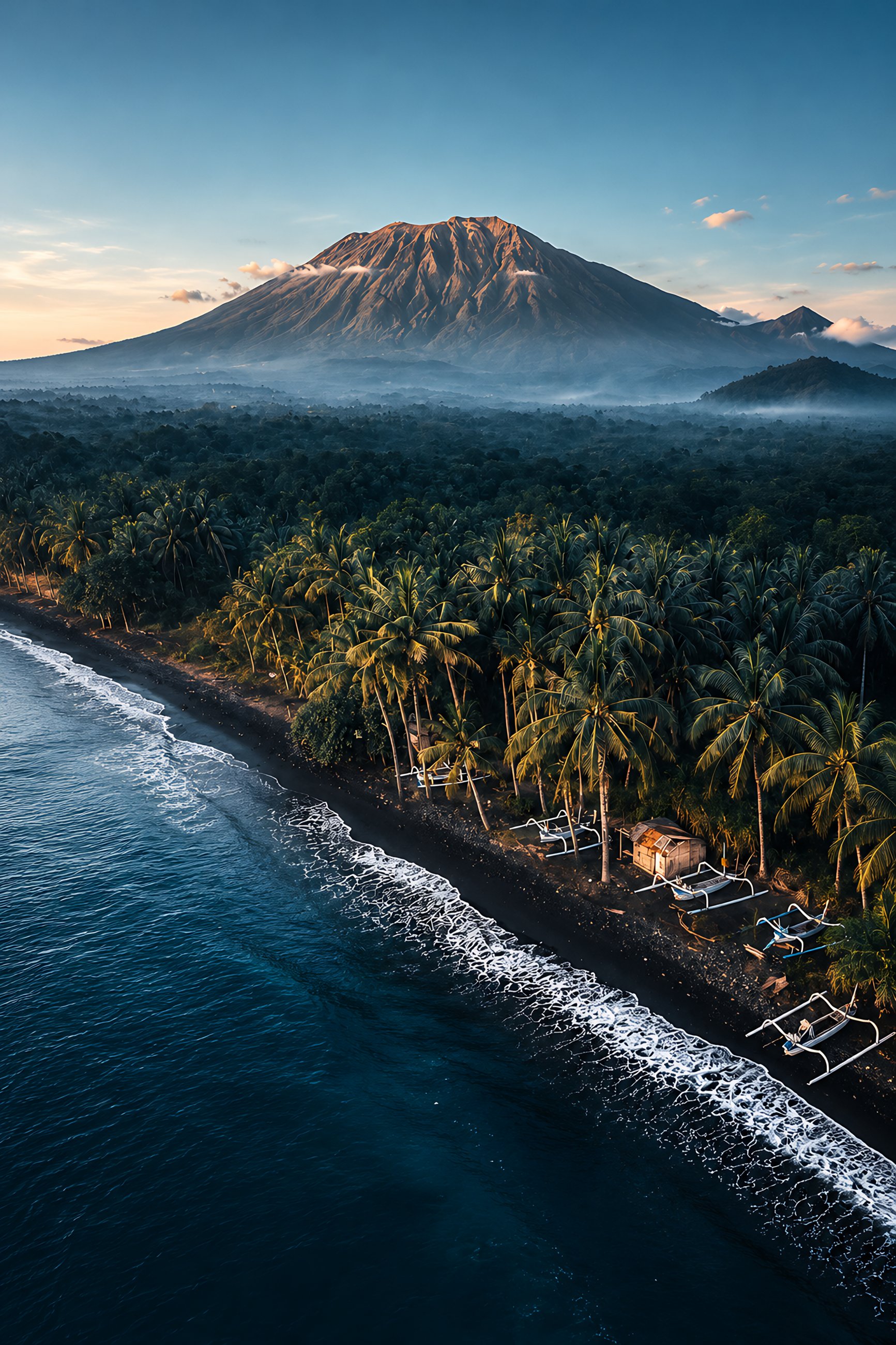
A Japanese submarine torpedoed the Liberty in the Lombok Strait on 11 January 1942, and she was run aground at Tulamben so her cargo could be saved. Two decades later, tremors from the 1963 eruption of Mount Agung slid her into the sea. Today the hull is covered in coral and gorgonian fans, with trevally, batfish and, with luck, bumphead parrotfish. Go at dawn, before day-trip groups arrive, wear booties for the slippery stones, and let a porter carry your tank.
Where can you see manta rays in Bali?
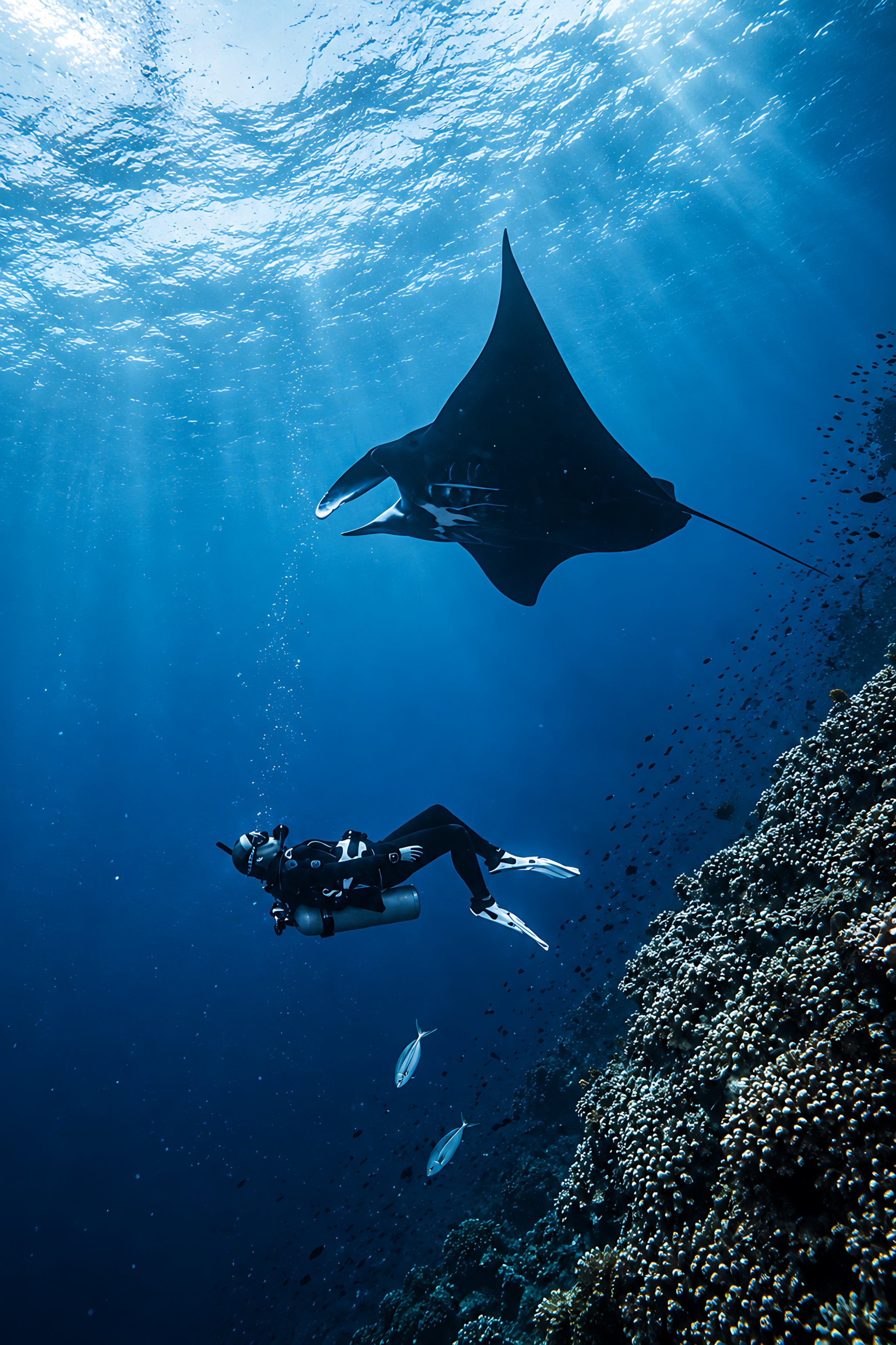
At Nusa Penida, all year round, at Manta Point on the south coast and Manta Bay on the northwest coast. Across the Badung Strait from Sanur, Penida sits on the main channel of the Indonesian Throughflow, so the water is colder and richer and the currents stronger. The waters around Penida, Lembongan and Ceningan form a marine protected area of around 200 square kilometres. Fast boats from Sanur take about 30 to 45 minutes, and many divers stay a few nights rather than doing a long day trip.
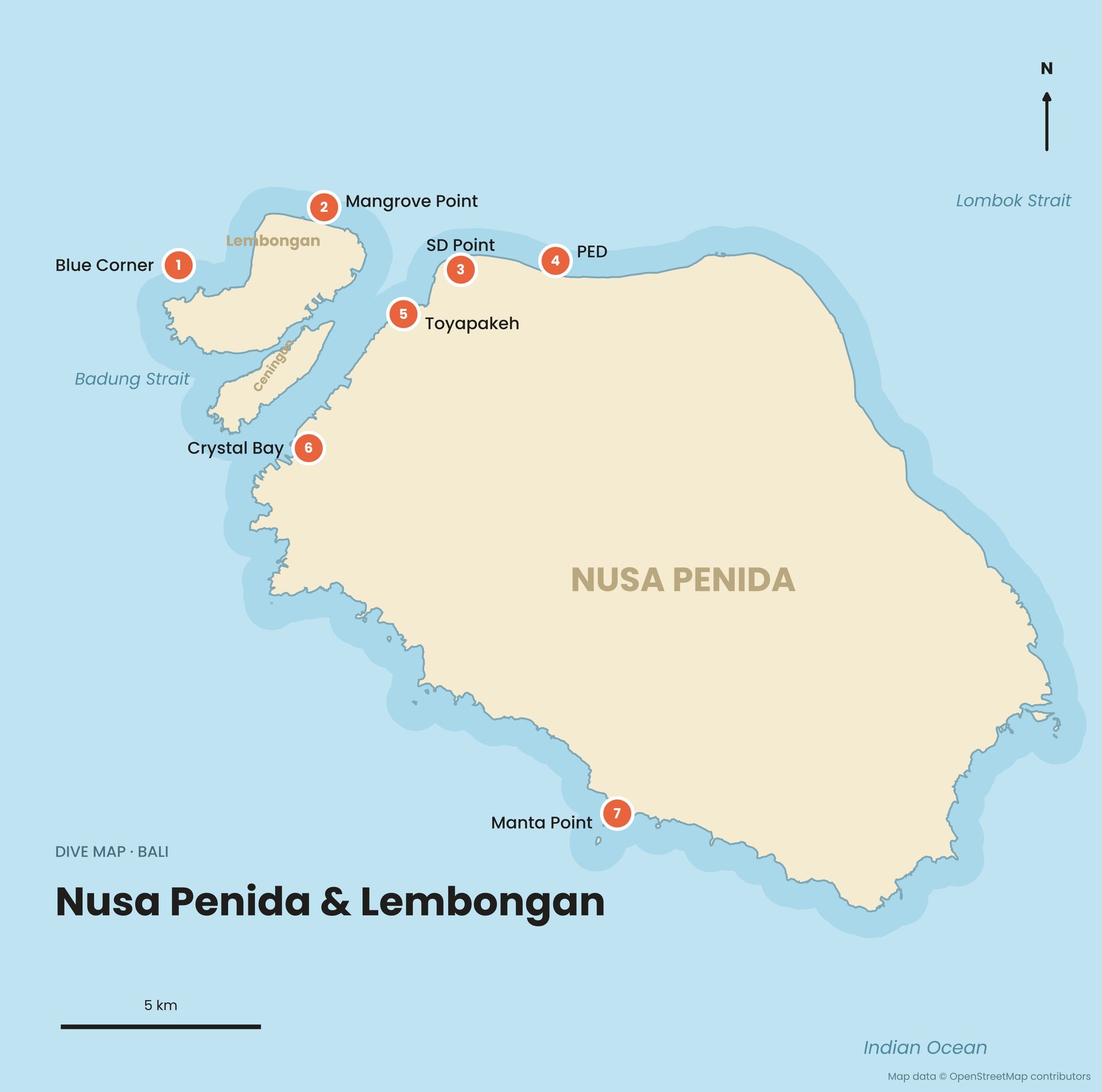
- Blue Corner, LembonganFast drift diving with strong, changeable currents. Advanced divers only.
- Mangrove PointA gentler drift, good for building confidence.
- SD PointA classic drift over healthy hard coral slopes.
- PEDLong, easy drifts with turtles and plenty of reef fish.
- ToyapakehA rich coral garden in the channel, often current-swept.
- Crystal BayThe famous mola mola site. The current can run down the slope and the water can drop below 20°C.
- Manta PointA cleaning station on the south coast. Expect surge and a bumpy ride.
These are reef mantas, Mobula alfredi, listed as Vulnerable by the IUCN and protected in Indonesia; researchers photo-identified 814 individuals here between 2012 and 2023. Manta Bay is mostly a feeding ground for younger rays, while adults use Manta Point to be cleaned and to court. When the south-coast swell is too big, operators switch to Manta Bay. Stay low beside the reef, never chase or touch the rays: a 2019 study found about 14 percent carried injuries from hooks or fishing line.
When is mola mola season in Nusa Penida?
Usually July to October, with August and September the most reliable months; outside that window sightings are rare. Most are bump-head sunfish, Mola alexandrini, rising with cold upwellings to cleaning stations at about 20 to 30 metres, beyond the reach of most beginners. Crystal Bay is the best-known site, and they also appear at Blue Corner and at Tepekong and Biaha.
Even in season, local operators estimate roughly one sighting per ten dives. Keep at least 10 metres away while a sunfish approaches the station and around 3 metres once it settles, and never touch it. Bring at least a 5 mm wetsuit and a hood.
Is diving at Nusa Penida dangerous?
It can be. Currents at Crystal Bay, Blue Corner and Toyapakeh can turn into downcurrents that pull divers deeper, and Divers Alert Network has warned inexperienced divers away from Crystal Bay. With the right experience and operator, it is very manageable.
- Get the experience first. Advanced Open Water plus logged drift dives is a sensible minimum for the current sites.
- Choose small groups. Four or fewer per guide, with an operator who will switch sites when conditions turn.
- Stay close to the reef. In a downcurrent, move towards the wall and the shallows, not into the blue.
- Carry a surface marker buoy and know how to deploy it, and dive early, when conditions are usually calmer.
When is the best time to dive Bali?
The dry season, roughly April to November, brings the best visibility and calmest seas. Tulamben, Amed and the north coast can be dived all year, while the rainy season, roughly December to March, brings rougher seas at some sites. For mola mola, aim for July to October; for mantas, any month works. September often gives the best mix of sunfish and smaller crowds.
Base yourself near the diving rather than driving for hours from the south: Pemuteran for Menjangan, Amed or Tulamben for the east, and Lembongan or Penida for the mantas. A good two-week circuit runs Pemuteran, Tulamben and Amed, Padang Bai, then Nusa Penida once you have warmed up on easier sites.
Quick answers
Can beginners dive the USAT Liberty?
Yes. It is a shore dive, and the top of the wreck lies at about 5 metres, with the shallowest parts at snorkelling depth.
How cold does the water get at Nusa Penida?
During upwellings it can drop to about 18 to 22°C below a thermocline, and has been recorded colder. A 5 mm wetsuit and a hood are sensible in mola season.
How long should I wait before flying after diving?
Divers Alert Network recommends at least 12 hours after a single no-decompression dive and at least 18 hours after multiple dives or several days of diving, longer after decompression dives.
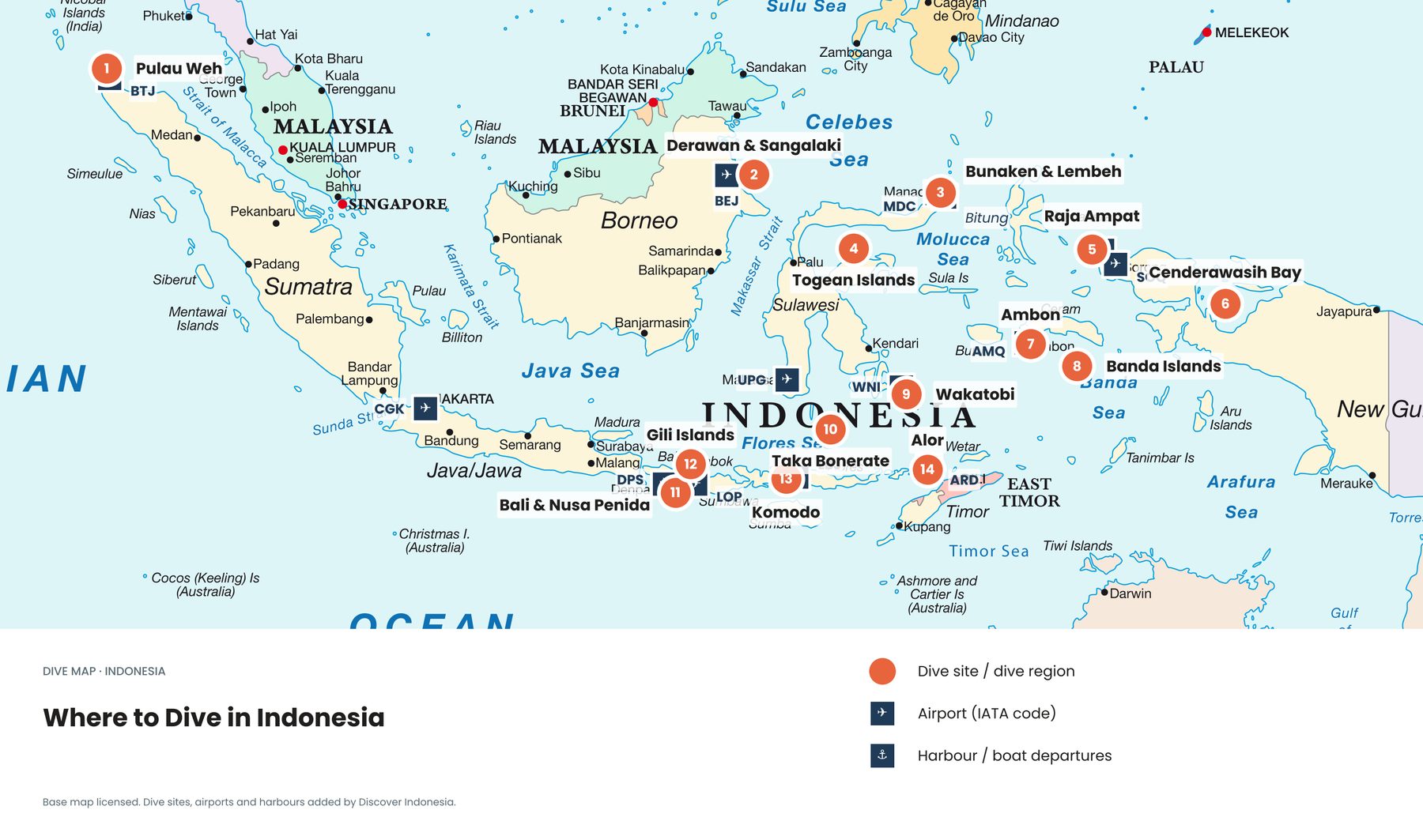
Heading east, compare Bali with diving Komodo and Alor's cold, clear straits, or see all of Indonesia's dive regions on one map. Our Discover Indonesia Bali guides cover the island in more depth; browse all our guides.
Facts checked October 2026. Park fees, boat schedules and operator safety rules change; confirm current details with your dive operator, West Bali National Park and the Nusa Penida MPA authorities before you go.
Sources
- USAT Liberty (Wikipedia)
- USAT Liberty Wreck (Bali.com)
- USAT Liberty (Tulamben Wreck Divers)
- Nusa Penida ISRA factsheet (IUCN SSC Shark Specialist Group, Important Shark and Ray Areas)
- Bali island could be manta nursery (Divernet, on Germanov et al. 2019, Frontiers in Marine Science)
- Mola mola in Bali (Nusapenida.org)
- Mola mola diving season in Bali (Ocean Earth Travels)
- Diving with mola mola at Bali's Crystal Bay (Remote Lands)
- West Bali National Park (Wikipedia)
- Biorock coral reef restoration (Global Coral Reef Alliance)
- Padangbai (Wikipedia)
- Nusa Penida and Nusa Lembongan (Wikivoyage)
- Flying after diving (Divers Alert Network)
- Reef data (Allen Coral Atlas, CC BY 4.0)
- Map data (OpenStreetMap contributors, ODbL)